

By TJ Guile
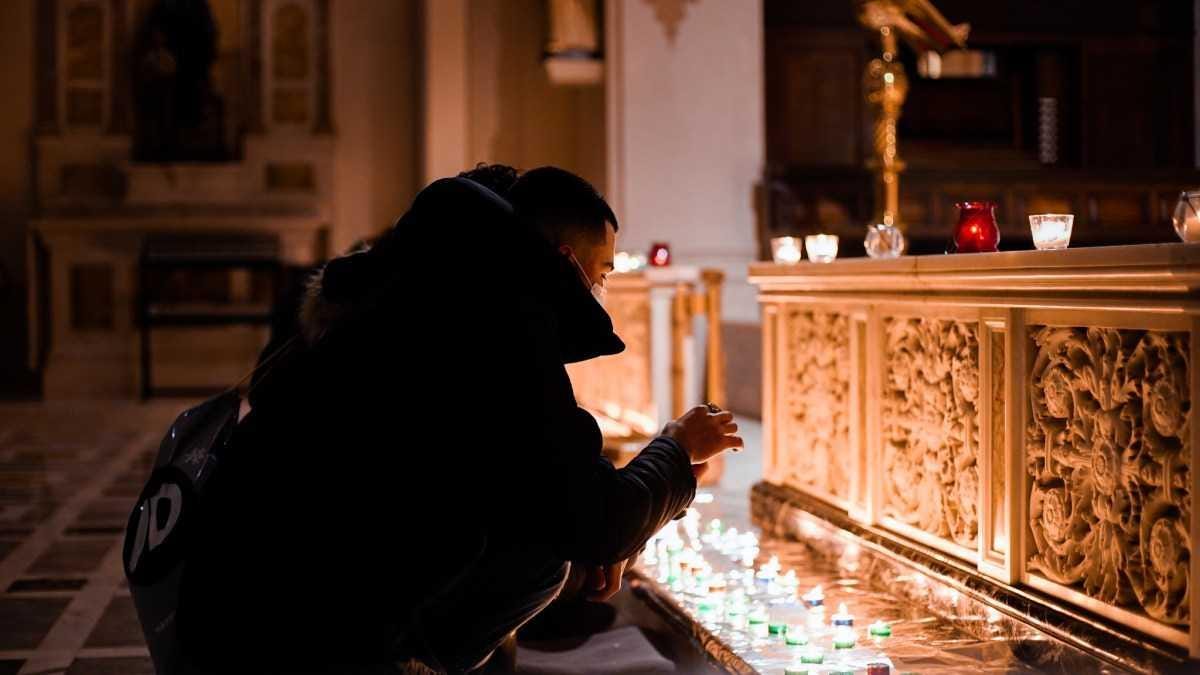
A recent report published by the Church of England has cast light on what attracts some younger people to that church in recent times. There are of course, many and varied reasons why these thirty young people who were interviewed, chose to practice their faith in the Anglican tradition. Has this experience been replicated inn other churches? Does it resonate with some young Catholics who have, or are coming into, the church for the first time? Are those young people looking for a full-fat faith or are they wanting something different? In a multi-ethnic, multi-faith or no-faith Britain, what is changing because something seems to be happening. Is it, as some claim, a return to a ‘full-fat faith’ among younger members of society?
We hear a great deal about secularisation in modern society, are we in a post or late secularist phase? ‘Late Secularisation’ is described by Bullivant, Vaughan Spruce and Durcan as a process “a combination of a largely formerly secular society and an active-involvement-in organised religion rate of less than 10 percent.” The authors point to an endpoint to secularisation where secularisation has run its course when everything that can be secularised, has indeed been secularised. The question they suggest is: what happens after secularisation? The authors of the Anglican report on young people might share their view that some young people have reached saturation point with secularisation and are coming out the other side of it. This point is of course, open to debate and many other views are available. But what we can consider here is, what is happening with conversions to the Catholic faith in urban England in 2026? Some will argue that Catholicism is gaining popularity among young people in Britain, with a notable increase in church attendance. Many may be drawn to its consistency and coherence amid a society with ever changing values and beliefs.
The Bible society report on the Quiet Revival published in April 2025, caused much discussion as did its subsequent retraction when it was pointed out that there were flaws in the data collection and methodology. However, there is anecdotal evidence from Catholic parishes across the country which appears to point to more people, including the young, are coming into the church. At the 2026 Easter Vigil, over two thousand people of all ages came into the Catholic church in England and Wales in one night alone. Some might even go as far as saying that five centuries after the English Reformation severed this country from Rome, Catholicism is quietly becoming the faith of choice among the young in Britain. Though the data may be compromised, the Bible Society report appeared to identify trends and pointed to the likelihood of more young people identifying as Catholic than Anglican. One could argue about this point but what if it is true? Why Catholicism? What is it about that faith which may be attracting them? The number of young people aged 18 to 24 attending church at all has quadrupled since 2018, rising from 4 per cent to 16 per cent. Dr Rhiannon McAleer, director of research at the Bible Society and co-author of the report, said the findings “completely reverse the widely held assumption that the Church in England and Wales is in terminal decline.” Overall, Christianity seems to be growing among the young. But within that growth, it is Catholicism, and to a lesser extent Pentecostalism, that is allegedly doing the growing.
Young people, it can be widely observed, may be searching for several things. Many have grown up in an era of relentless information, fractured identities, and institutions that seem to shift their positions with the cultural wind as well as sometimes coping with broken families and relationships. A Church that does not change its teaching to fit the moment, but instead offers something ancient and consistent, may have a particular appeal. Archbishop Mark O’Toole of Cardiff has noted that many of the Catholic-curious among the young have simply “surfed the net” before finding answers in the Church. Coherence and consistency are frequently mentioned in discussions with young people.
