


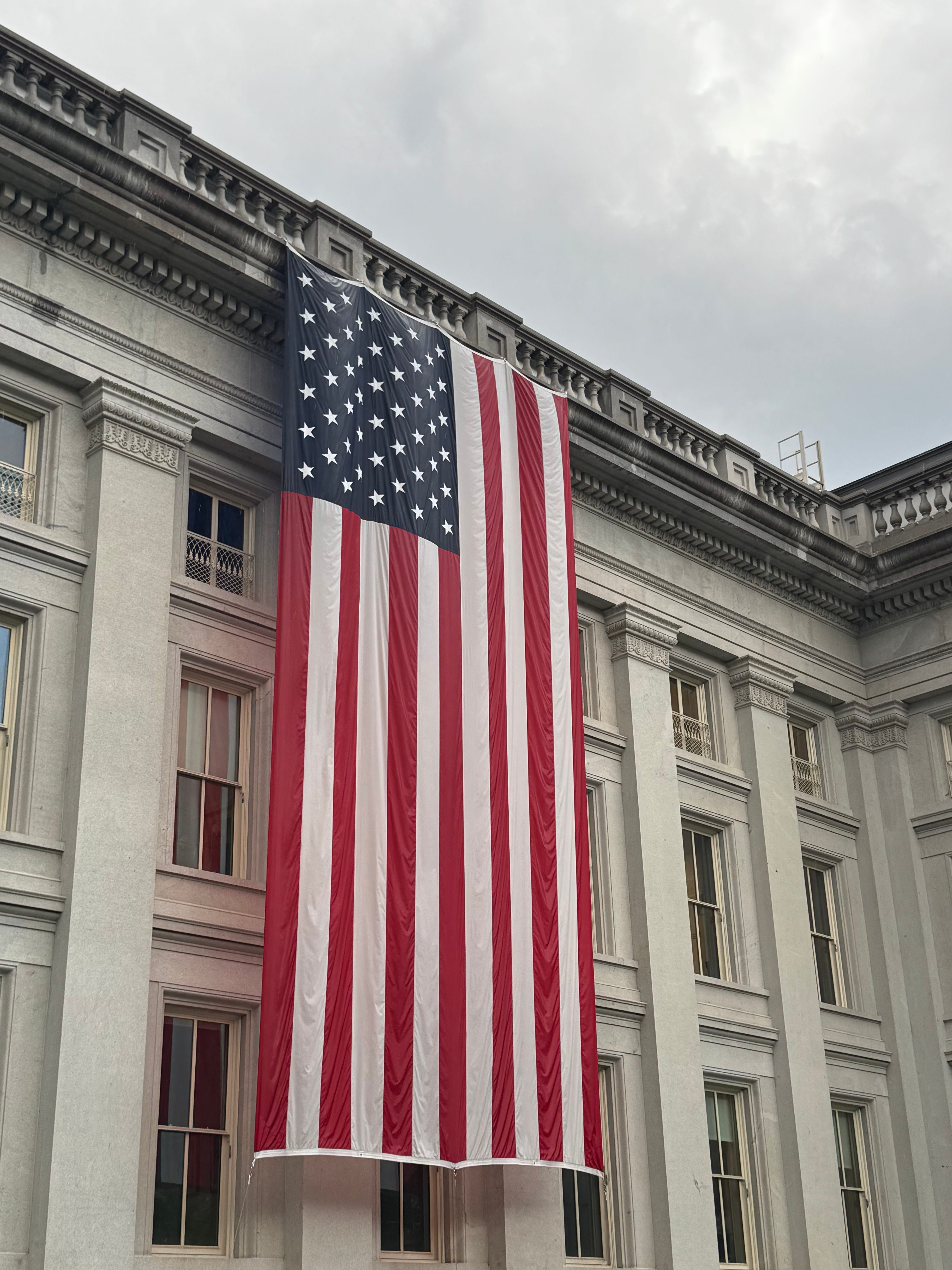
Until 2023, I had been to America precisely once, to New York in 1999, and I was completely in awe of it. The buildings seemed impossibly tall, the streets impossibly busy, and there was chatter everywhere. People were friendly, everything was enormous, and I had that unmistakable feeling of being somewhere vibrant and exciting.
Then I went home and, for more than twenty years, America returned to being what it is for most British people: a place largely encountered through television and film.
Since establishing Catholic Unscripted in 2022, however, I have been blessed to return many times. We have travelled to Chicago, Ohio, North Carolina, Florida and Tennessee and, wherever we have gone, we’ve received the most extraordinarily warm welcome.
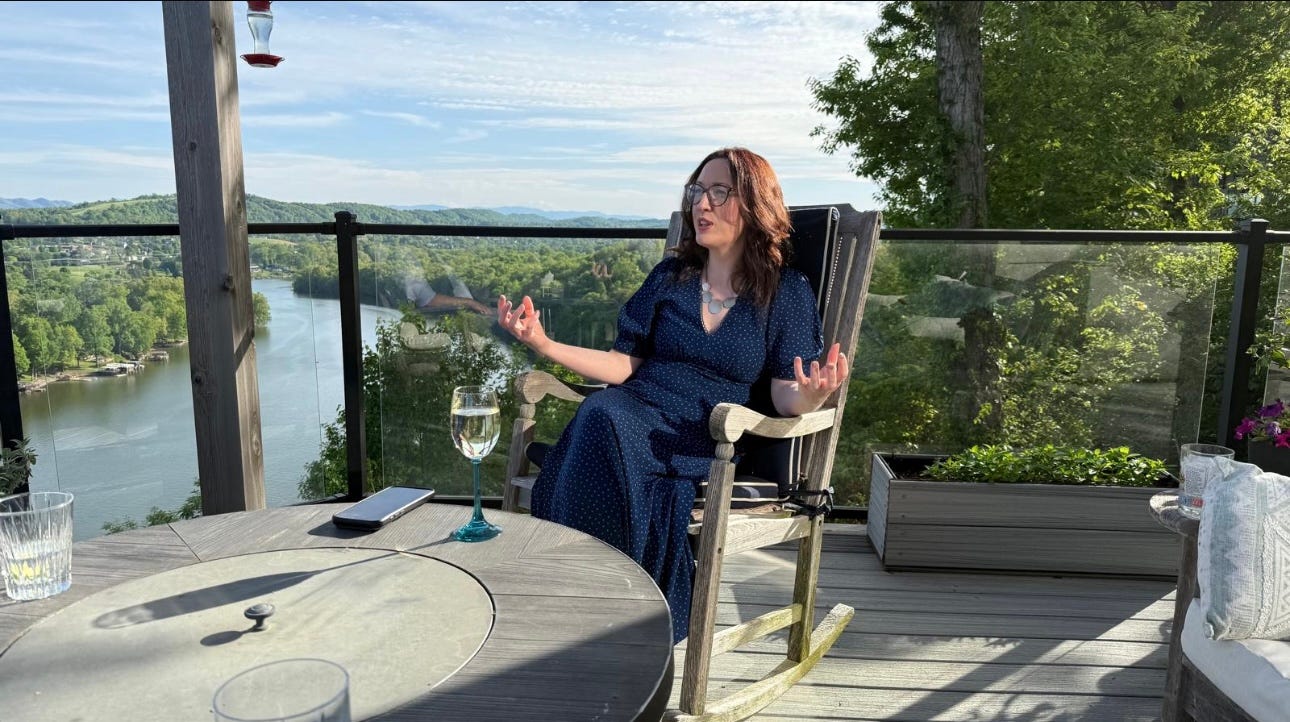
Our American friends have collected us, fed us, driven us for distances that they regard as entirely normal but that we would baulk at, and taken us to places we would never otherwise have seen.
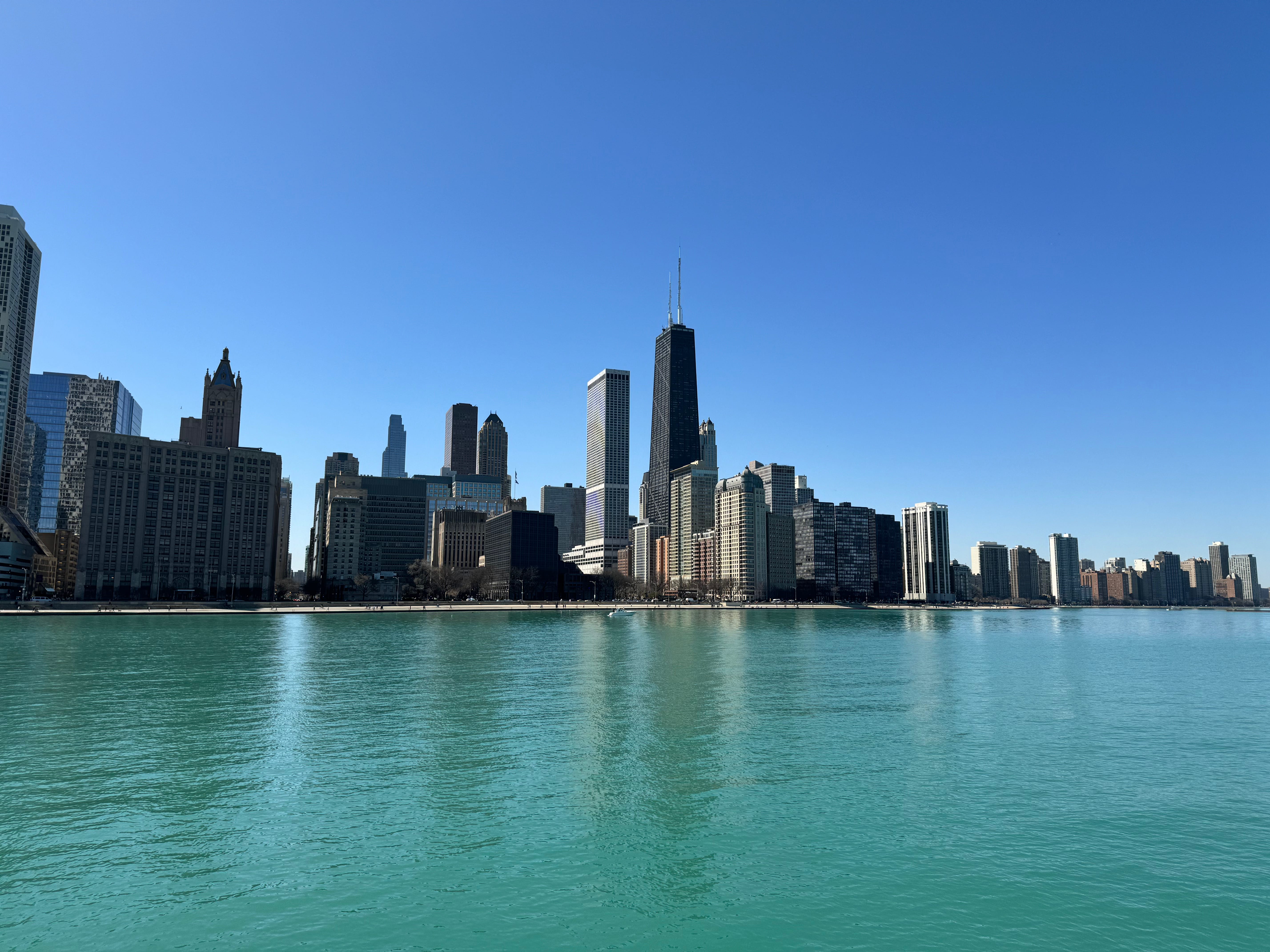
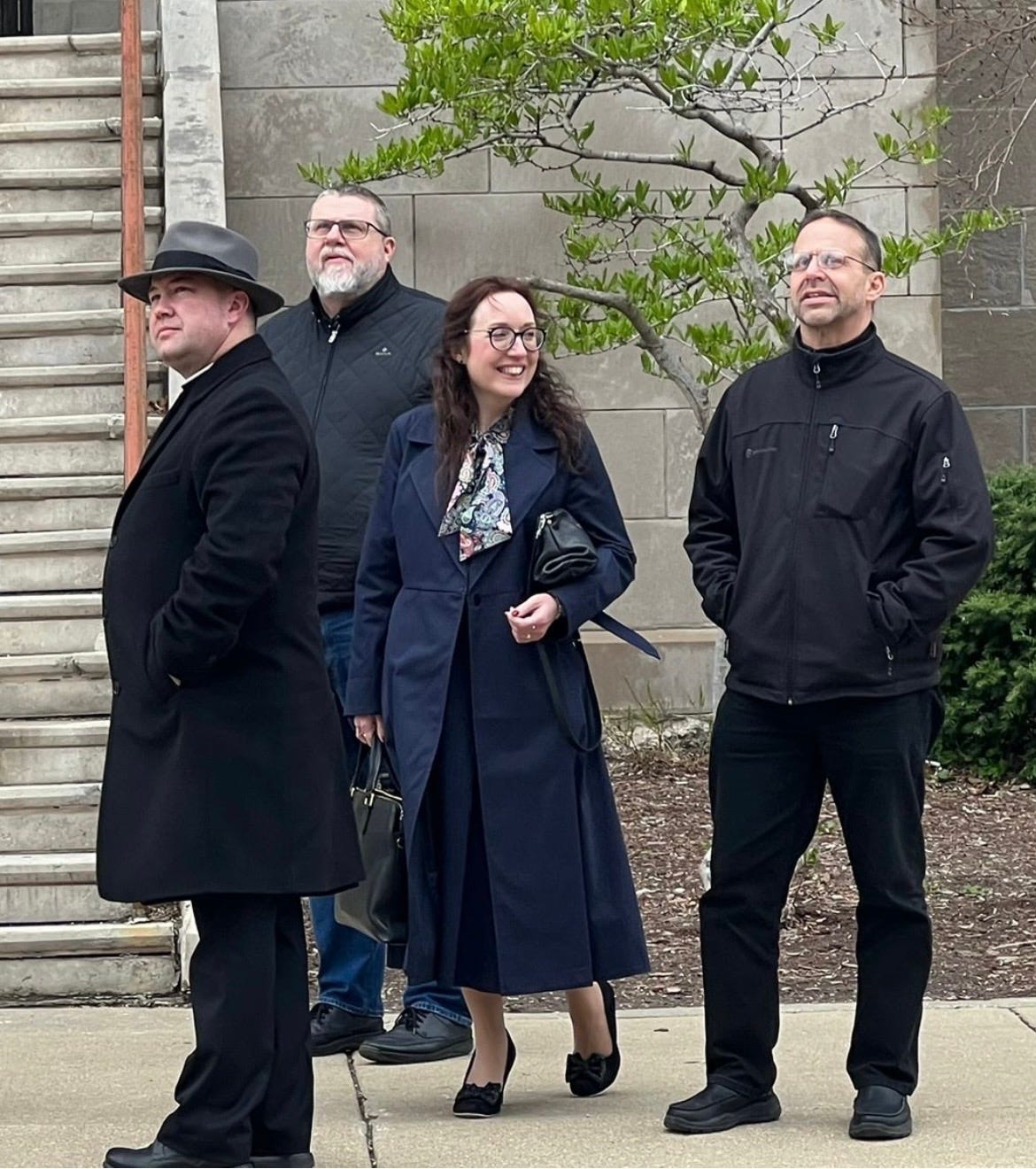
This summer we were fortunate enough to return again, this time with the Bennett and Lambert families in tow! The trip was partly for work (although when your work consists of talking to interesting people about things you care deeply about, it feels fraudulent to describe it as such) and partly to tag on a family holiday in the Outer Banks of North Carolina.
The America we think we know
The curious thing about visiting America as a Briton is that it feels simultaneously foreign and familiar.
We think we know it before we arrive. We have watched American films and television all our lives. We know what a diner looks like. We know the yellow school buses, the enormous trucks, the clapboard houses, the police cars, the flags and the highways. Even the road signs somehow seem familiar.
There is, of course, some truth in the America we see on screen. But like any artificial depiction, it misses so much.
One of the things that strikes me every time I visit is the human interaction.
Though we Britons may sneer a little, as we are wont to do, when the Americans say 'Have a nice day', there is a sincerity to this which we fail to appreciate when seen in films. When somebody says hello as you pass them, they look at you. Anyone wearing a hat, tips it. When you order something and hear, “I got ya!”, there is a little moment of genuine acknowledgement. This is striking for us Britons who have lived through the degradation of service. Foreign speakers, bad attitudes and a general sense that you are at fault for disturbing them.
These are tiny things, of course, but civilisation is largely constructed from tiny things.
The cynic might point out that a service industry reliant upon tips has a fairly strong financial incentive to produce cheerful waiters. Fair enough. But that does not entirely explain it. We have encountered the same warmth in places where nobody stood to earn a cent from us.
There remains, at least in the parts of America we have visited, a habit of politeness and courtesy that I fear we have lost to some extent in Britain, but it would be false to reduce a great contient to a Norman Rockwell painting.
Our American friends themselves speak about the deterioration of some cities, the devastation caused by fentanyl and other drugs, crime, family breakdown and all the other problems with which the country is wrestling. No nation is problem-free, and certainly not one as enormous and varied as the United States. Our experience is necessarily limited to the places we have visited and the people we have met. But acknowledging what is bad should not require us to pretend that what is good does not exist.
And we have seen a great deal that is good.
Does everything really have to be this big?
There is also the sheer size of America.
Everything seems to have been constructed by people who were never introduced to the concept of insufficient space!
The highways are enormous. The cars are enormous. The hotel rooms are enormous. The pavements are wide. Even the elevators are large. And yes, we Britons always sneered that the people were too, but we didn’t notice that at all. Either because we have caught up with them, or they have slimmed down!
Coming from a country where two cars meeting on a rural lane can result in a tense diplomatic negotiation involving hedgerows, reverse gear and questions of personal honour, there is something slightly overwhelming about it all.
We have roads laid out centuries before anyone imagined the motor car, houses squeezed into spaces determined by medieval boundaries, lifts roughly the dimensions of a standing coffin and parking spaces seemingly designed for vehicles no larger than a wheelbarrow.
America simply spreads out, and allowed us to breath out a little of the tension we had built up over the year.
The more I travel through the USA, the more extraordinary I find the scale of everything, and how much has been achieved in such a short time.
In little more than two centuries, an immense country has been crossed by roads and railways, towns and cities built, industries established and communities formed across distances that are difficult for a European mind properly to comprehend.
There are complicated chapters in that story, as there are in the history of every nation. But there is also something undeniably impressive about the energy behind it. You begin to understand something of what is meant by the American spirit, and perhaps even that much-mocked idea of the American Dream.
There is a confidence embedded in the landscape which starts to seep into your veins: We can build this. We can go there. We can make something. It is a hopeful nation.
For a Briton accustomed to interminable roadworks, it is very refreshing. I think the gap between the Wright Brothers first flight and the manned mission to the moon, was shorter than the time it took to clear the traffic cones from the northbound carriageway on Streatham High Street.
And then there was the Outer Banks
The final part of our trip took us to the Outer Banks in North Carolina, somewhere I had never even heard of until Mark Lambert suggested we spend the family-holiday portion of our trip there.
I am very glad he did.
I am not enormously well travelled. Until my late teens, the only country I had visited outside Britain was Ireland, where I spent summers with family. At nineteen I travelled to the Holy Land, and during my twenties managed a number of trips around Europe, including much of my beloved France, as well as Croatia, Vienna, Hungary, Malta and Belgium.
So I have seen enough of the world to have some points of comparison, but not so much that I have become blasé about beautiful places.
Nothing prepared me for the Outer Banks.
There is a wildness about it that photographs struggle to capture.
On one side is the Atlantic Ocean; on the other, the great stretches of water known as the Sound. The land between them sometimes seems almost impossibly thin, as though the sea might at any moment remember that it was there first.
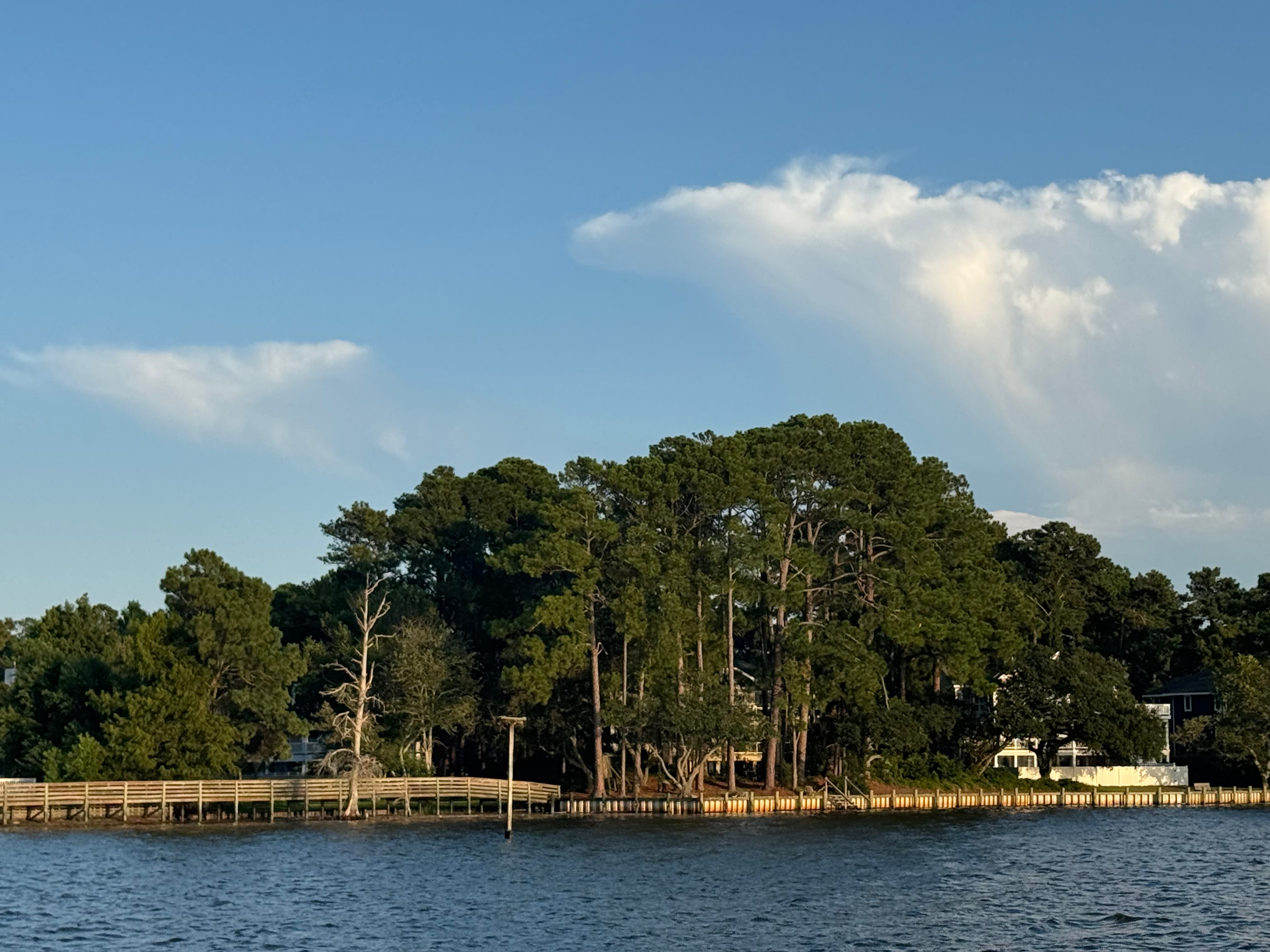
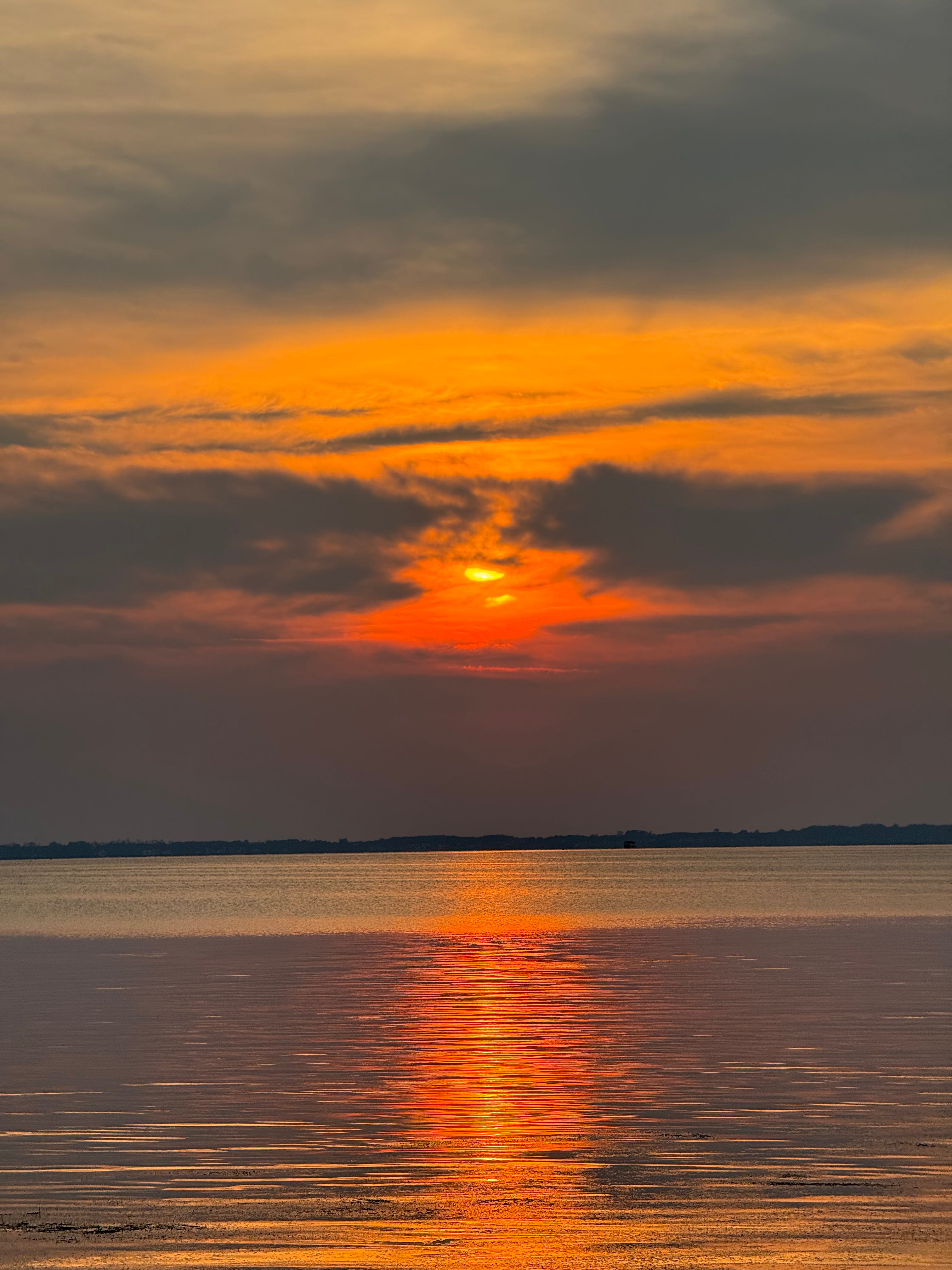
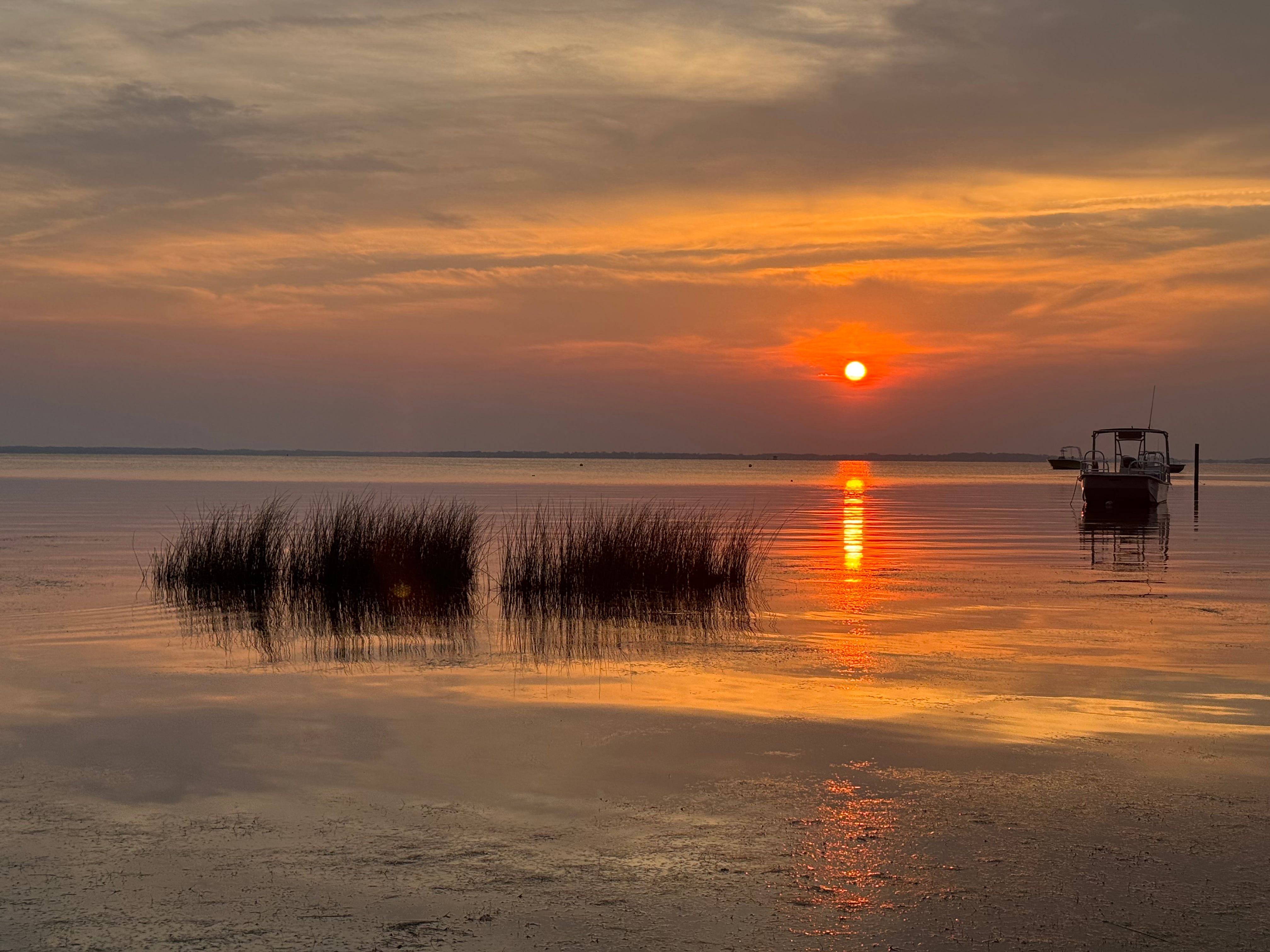
The sunsets across the Sound were the most beautiful I have ever seen.
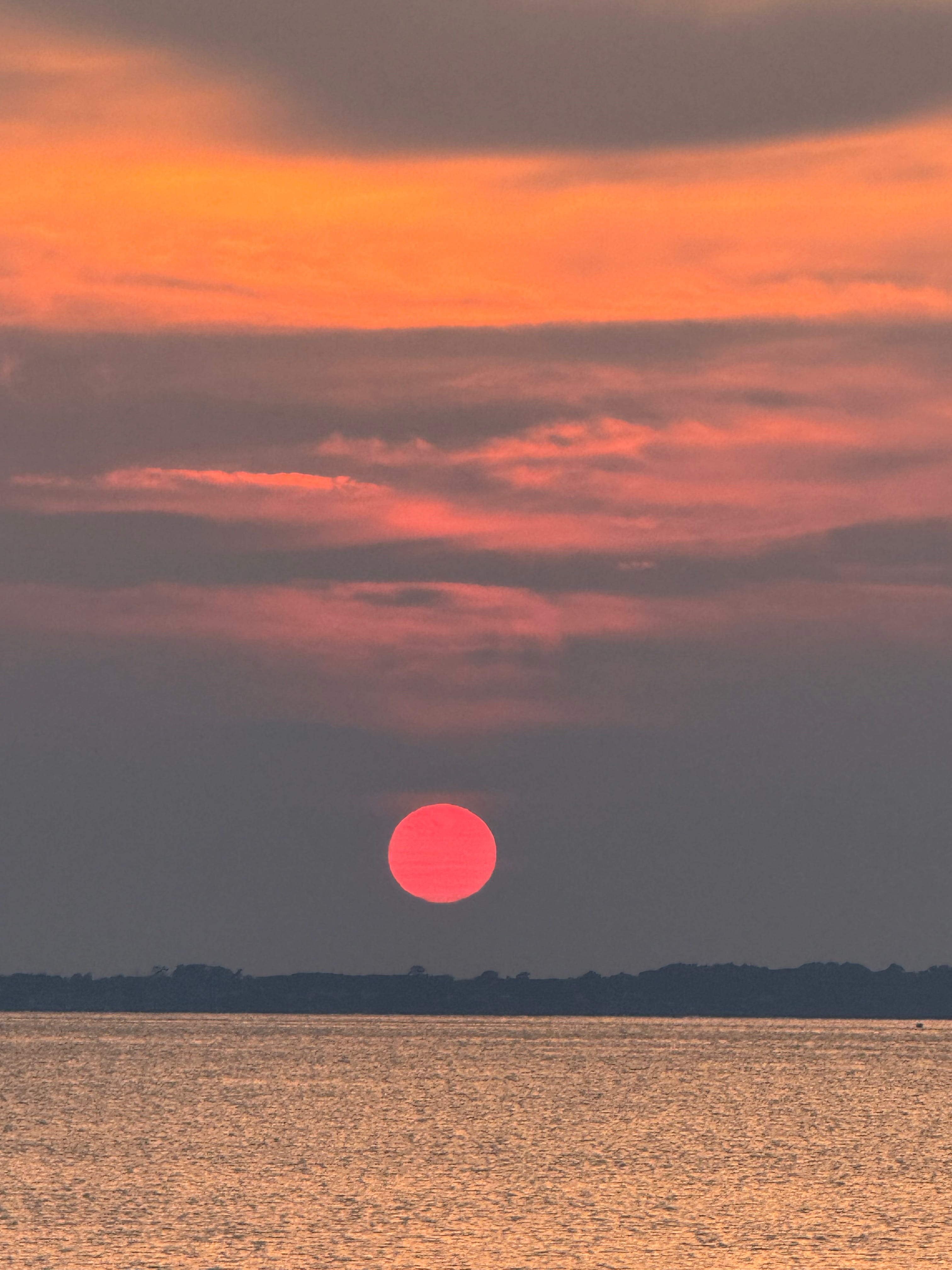
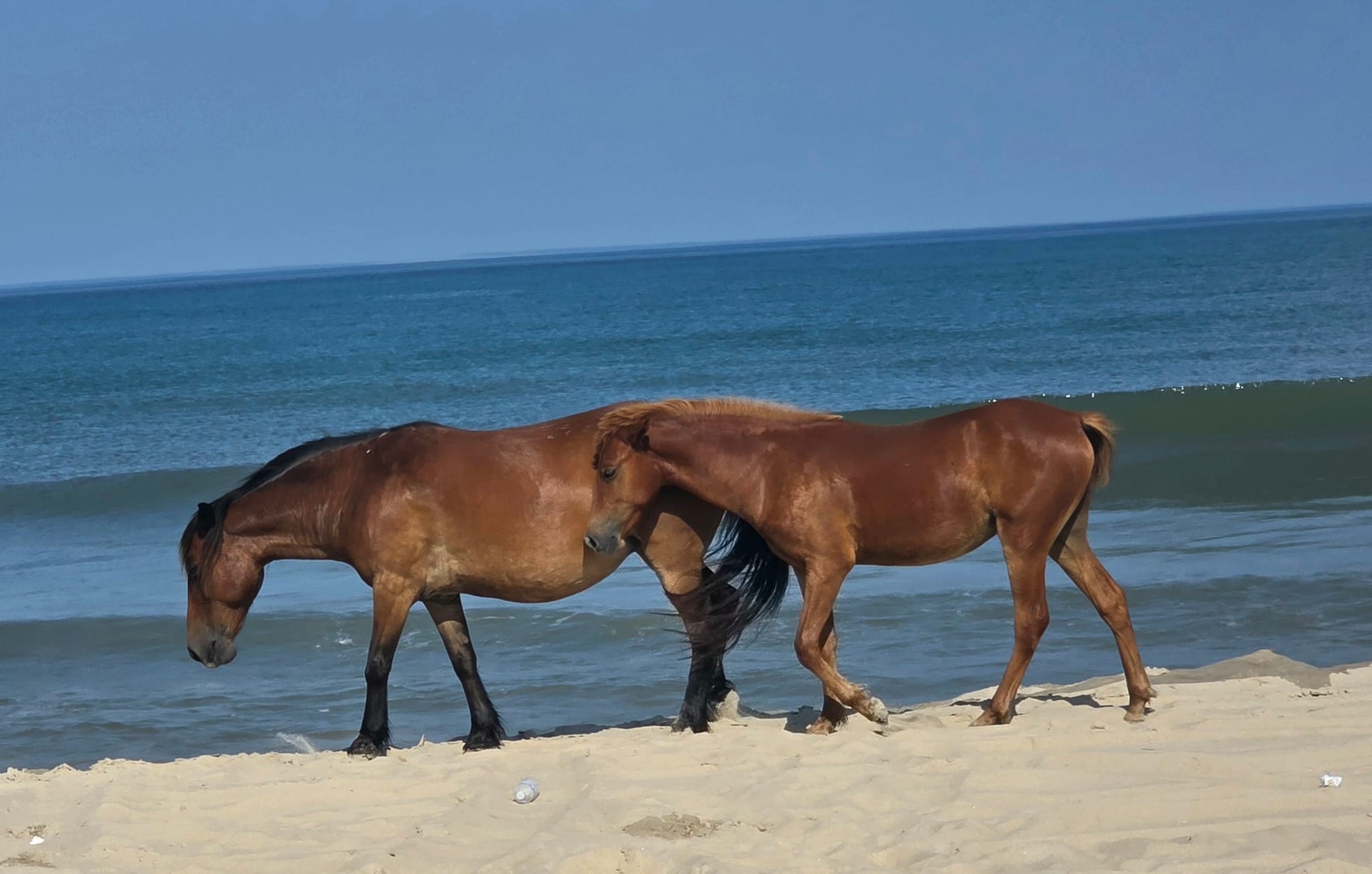
Dolphins leapt from the Atlantic. Wild horses ran along the beaches. Houses perched high upon wooden stilts, looking less as though they had conquered the landscape than negotiated temporary permission to remain there.
The heat was phenomenal and the humidity almost unbearable at times.
Fortunately, being America, they have thought of this. Air conditioning is not regarded as an optional luxury but an essential component of human survival. You move from air conditioned house, to car, to shop, occasionally making brief expeditions into the tropical exterior.
My Irish genes are simply not designed for it.
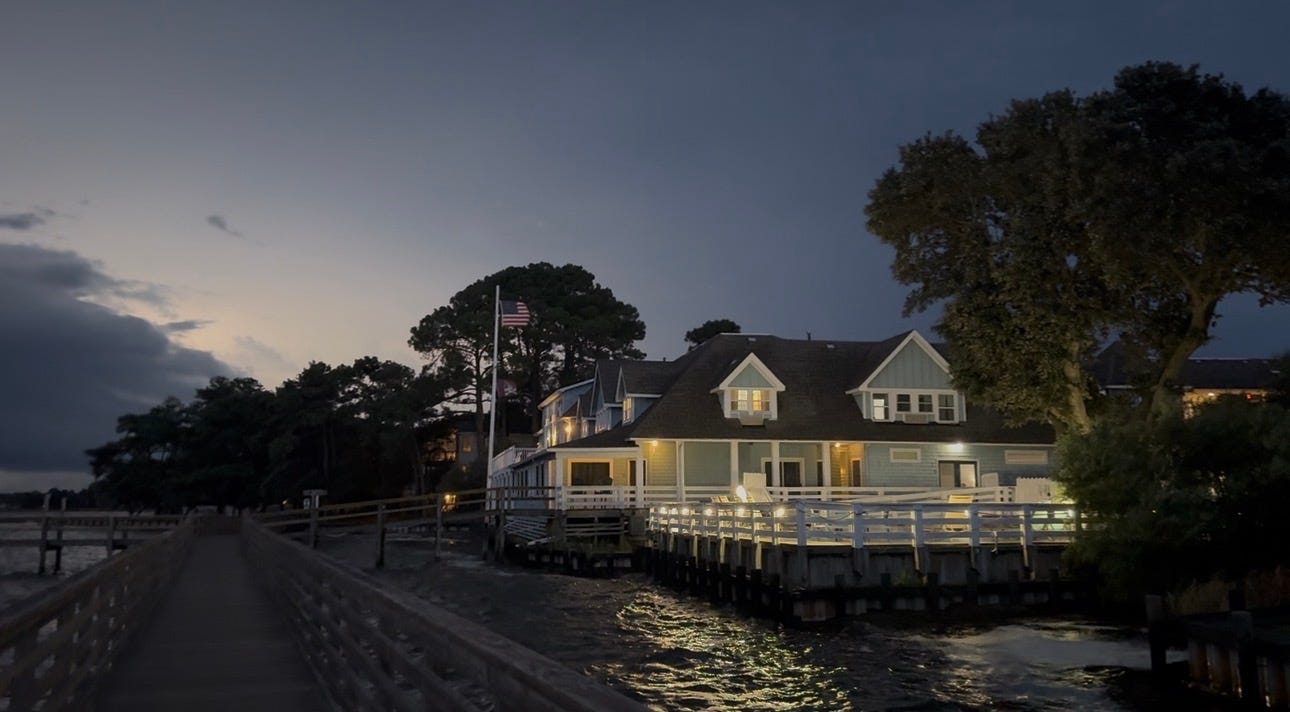
I am much more at home with a storm, great waves and a wild sea; and we got some of that too. A great storm whipped up across the sound a few nights while we were there and lit up the sky.
Things worth keeping
On our last day in the Outer Banks we visited a small museum showing what life had been like for a family living there in the 1920s.
For Americans, this was history.
For a group of English people whose grannies had lived in houses older than the exhibits, it was rather charming.
But the more I thought about it, the less amusing the comparison became.
There was something rather moving about the care with which this relatively recent past had been preserved. Here were ordinary household objects, buildings and memories treated as things worthy of being handed on because they told the story of the people who had lived there.
America is a young country. Its history, at least in the form of the nation we recognise today, is comparatively short. Perhaps that is why Americans can sometimes seem more conscious of preserving the pieces of it they possess.
We Europeans have the opposite problem.
We have so much history that we can become careless with it.
We walk past buildings older than the United States without giving them a second glance. We once worshipped in churches where generations prayed for centuries before our grandparents were born. Ancient villages, monasteries, cathedrals, wayside shrines and traditions surround us. And because they have always been there, we can begin to imagine that they always will be.
Perhaps there is a lesson for us in watching Americans carefully preserve a family home from the 1920s. We should be much more reluctant to discard what we have inherited.
We should think very carefully before ancient churches are stripped of their purpose, before sacred buildings become entertainment venues, before cathedrals become backdrops for discos, and before things which survived centuries are sacrificed to the fashions of a single generation.
There is a great difference between possessing an inheritance and cherishing one. Sometimes it takes visiting a young country to realise quite how old your own is.
The things that matter
And in true Oscar Win American Style, here comes the Schmaltz!
I am so grateful for all that God has given to me. Most especially my family, not all of whom made the trip with us, but who remained always in our prayers as we travelled. I am thankful for Mark and his family in my life. Whether traveing around, or sitting around a table, our families prayed together, talked toegther and laughed together. The older I get, the more I treasure true friendship, and realise what a precious commodity it is! This includes the many American friends we have made along the way, whose extraordinary generosity and kindness have made so many of these experiences possible. Friends who have opened up their homes to us, introduced us to their families, shared their lives with us and shown us a country very different from the one we thought we knew through television.
Those are the moments that remain when the flights, hotels and itineraries have begun to blur.
We are British enough that excessive enthusiasm still makes us slightly uncomfortable. We shall not be purchasing matching stars and stripes outfits, MAGA hats or saying “Y’all”. There are limits.
Nor do I imagine America to be perfect. Americans themselves certainly don’t. They worry about their country, argue about it and lament what has been lost in much the same way that we do about Britain.
But I do love America.
We know that we can love a country without believing it flawless. In fact, that may be the only way really to love one. Just as we love flawed people.
And travelling there has made me think rather more about my relationship with my own country.
America’s vastness makes me appreciate the intimacy of Britain. Its newness makes me appreciate our age. The care with which Americans preserve fragments of their past makes me wonder whether we sufficiently value the enormous inheritance beneath our own feet.
We went to America because of Catholic Unscripted, and now, inspired by our visits and formed by our friendships, we are about to embark on a big change. A new chapter is about to begin.
Watch this space!
Well done, K! Great memories of our day in DC. We got you!
Very nicely put. Its inspiring to hear that. Living in the UK it makes me want to go over and experience what you say. ❤️