


In Apple TV’s futuristic series Silo, characters are given a drug in an attempt to suppress the memory of the person they once were. The protagonist Juliette Nichols is a strong willed woman in constant pursuit of the truth. This instinct is muted by the drugs, but the regime cannot quite make a new woman of her. The tick of her former lover’s watch, the comic tenderness of a PEZ dispenser, the shock of love embodied in familiar objects: these relics pry open a sealed door. Memories of the woman she was keep fighting to surface. Love has left a trace that power could suppress but not quite destroy. There is something unique about the human person, an inseparable unity of body and soul. Despite the attacks, something fights through, a wounded but not eliminated will.
A Catholic friend I once knew used to complain of an abusive spouse. If their story was to be believed they were suffering daily from quite overwhelming abuse, sometimes physical, often mental and undoubtedly spiritual. “But X can’t help it” they would say, “I know it’s not their fault”. The behaviour would always be explained away with stories about a difficult upbringing or early childhood trauma. Whilst there is merit in acknowledging trauma, I was surprised by this attitude of resignation, and wondered whether the despair was symptomatic of the culture at large. “X simply can’t change” I was told.
I have often thought about this. Whether X could change or not. And, if not, to what extent they could be held accountable for their actions? My old friend deduced ‘not at all’.
Yet, don’t we all suffer with wounds throughout life; some lesser, others greater, some hidden, others more obvious. No one gets to adulthood unscathed. To conclude that these wounds define a person and cause them to behave in ways that are out of their control is to deny their dignity as human, made in the image of God.
Where does culpability come in? Determinists would argue that there is no such thing as free will, it is merely an illusion. How we act, what we do, what we think, how we respond is all determined by prior causes outside of our control. Humans follow the same laws of cause and effect as every other physical thing. We are like a man locked in a room, unaware that it is locked and choosing to stay inside. We feel like we made the choice, but the truth is that we could have made no other.
Jean Paul-Satre took a different view; a libertarian who claimed that there was no objective purpose, nor anything else which determines our actions because ‘existence precedes essence’; humans exist before they have purpose and subjectively define their purpose for themselves.
Neither of these positions is adequate for the Catholic, and both lie behind the increasingly therapeutic and pharmaceutical culture that we now find ourselves in. The one that claims we have no control has led to a culture that simply medicates problems, the one that says we are free to choose the path our lives take but removes any destination, offers therapy to those lost in the abyss.
Both are indicative of a people far from God.
I used to work in a large urban high school. I saw poor behaviour reclassified as illness beyond self-control, and I also saw how often this reduced human persons to the level of beasts.
During the period of time I was working in education, between 1998 and 2018, Autism diagnoses increased 787%. There was a 62.4% increase in ‘probable mental health disorder’ among children 8-16. In that time period there was a 130.7% increase in mental health diagnosis among 17-19 year olds, 100% increase in OCD between 2007-2023, 69.5% inscrease in ADHD over the same time period, and 93.2% increase in generalised anxiety disorder. New disorders and syndromes appeared all the time, children were labelled and medication prescribed. The outcome was rarely improved behaviour, better manners, higher academic results. In fact, in a great number of cases, the opposite outcome was true. One is left wondering whether the cure may be worse than the ‘disease’.
The Catholic answer refuses two temptations at once. It refuses the cruelty that ignores mental illness, trauma, coercion and diminished capacity. It also refuses the reductionism that converts every sin into a symptom and every sinner into a victim who could never have acted otherwise. The Church is more compassionate than the first view and more respectful of the human person than the second.
Catholic moral theology begins with distinctions. The moral character of an act and the personal culpability of the one who performs it are related, but they are not identical. An act has an object, an intention and circumstances. Circumstances can increase or diminish responsibility, but they cannot turn an intrinsically disordered act into a good one. A killing carried out by a drugged and manipulated man does not thereby become an act of justice. His guilt, however, may be drastically reduced.
The Catechism states both that ‘Imputability and responsibility for an action can be diminished or even nullified by ignorance, inadvertence, duress, fear, habit, inordinate attachments, and other psychological or social factors.’ (1735) and that ‘Every act directly willed is imputable to its author’ (1736)
Catholic teaching has always been realistic without becoming deterministic.
“Man is only a reed, the weakest in nature, but he is a thinking reed” Blaise Pascal
Unlike the blade of grass, the mountain lion, the ‘intelligent’ dolphin or the machine, the human person has a will. Though he has instincts and desires, man is not (or should not be) a slave to them. He does not simply act instinctively, he can reason, deliberate, judge, experience what American philosopher Harry Frankfurt called ‘higher order volitions’.
Aquinas argues that the will always desires the good, it only chooses evil if the intellect misjudges a lesser good as a current priority. Virtue must be cultivated and reason used to properly order passions, and this is completed by grace. The Catholic tradition has long expressed the harmony of grace and nature in the phrase gratia perficit naturam – grace perfects nature. This principle explains not only the relationship between man and God, but also the proper understanding of human effort. Mans natural gifts are real, good and ordered to truth, but insufficient for his supernatural end.

Every man has a calling to do his part and to allow God to elevate him.
But what becomes of moral responsibility when both the natural element (our own effort) and the supernatural element (God’s grace) are nullified? When every moral failure is treated as though some drug, diagnosis or wound has already answered the question of guilt?
Modernity has invented a peculiar secular absolution. It has no confessional, requires no humility, and asks no restitution. It simply changes the noun. Cruelty becomes a trauma response; betrayal becomes an attachment style; rage becomes dysregulation; greed becomes a coping mechanism, and the culprit becomes the victim.
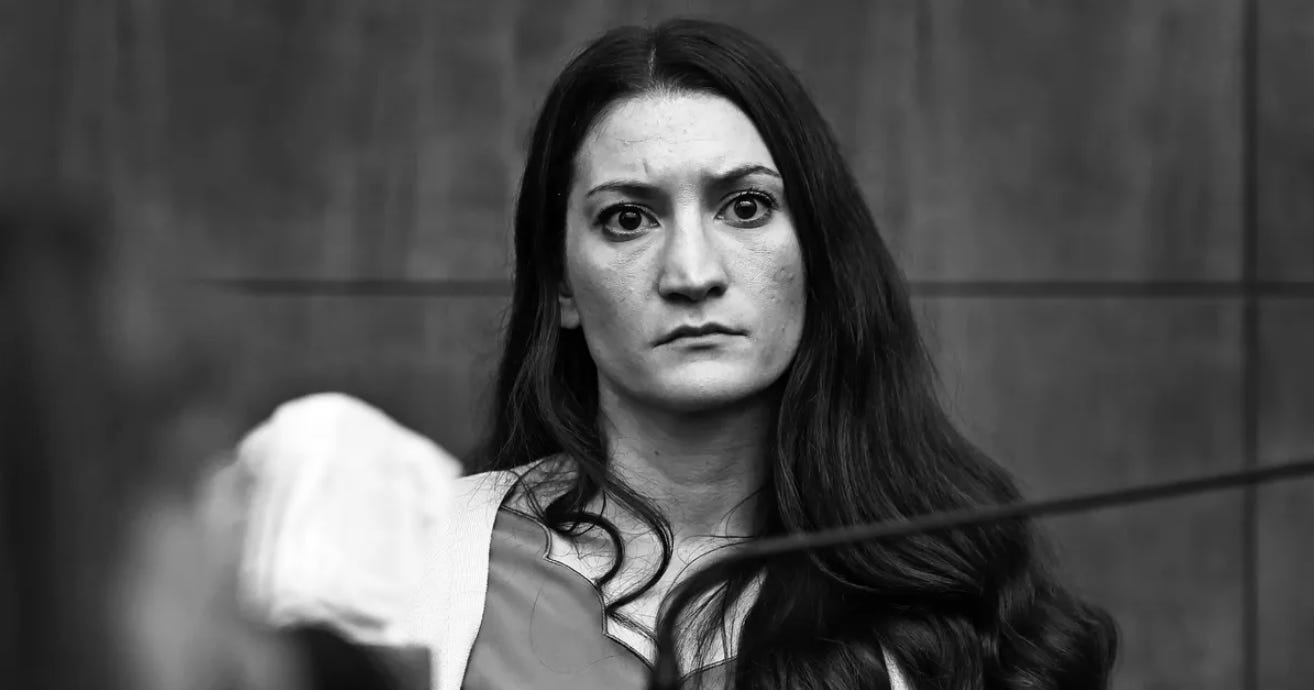
Which brings me to the Lindsey Clancey case. I claim no expertise in either medicine or law, but neither do I need them. I am not interested, here, in coming to conclusions about her particular case, but rather about what her case points to. There is dark spiritual cloud hanging over the whole thing.
A young British doctor who I admire for his resolute stance on pro-life issues, shared an article entitled ‘Can People Please Stop Being Morons About the Lindsay Clancy Case?’ Describing it as an excellent piece. In it the author chastises those who fail to take account of Clancy’s serious mental diagnosis during the brief time that she was killing her own children. He has a point, but the deeper question is whether we can be confident about the psychology behind the diagnoses in the first place.
‘Mental Health’ is a notoriously slippery field, and Catholics (who have inherited a true anthropology) would be right to have concerns about some of the things presented as ‘facts’ in this field. Much of Freud’s work is, at the very least, questionable and at worst, dangerous. And he is not alone. John Money and Herbert Marcuse both made major contributions to psychology by redefining how the discipline views human sexuality, gender, and societal repression, the effects of which linger in the disordered sexuality and ‘gender’ confusion we see around us today. Much of these putative advancements were discredited down the line, but not before they had taken hold in the academy and the public consciousness.
Whilst it is right to be compassionate where true freedom is curtailed through no fault of one’s own, we must not forget the responsibility each man has to play his part in his growth towards heaven. This includes the choices we make about what medicines and therapies we lean on, what practices we partake in, what distance we leave between us and God, and what idols we place in the way.
Pope Pius XII saw the danger of reducing the person to his psychology. Addressing psychotherapists in 1953, he insisted that the human being must be considered as a whole, as a being ordered beyond himself to God. Of our drives and inner mechanisms, he wrote: ‘They are not the soul nor the man.’ Whilst an external influence may press upon the will; it does not follow that it always compels it.
One external influence that undoubtedly presses upon the will of all women born in the last 60 years, is the normalisation of abortion.
In 1974, Archbishop Fulton Sheen asked us all to think “…How many mentally disturbed women we are going to have in the United States in the next 10 or 15 years when the guilt of abortion begins to attack the mind and soul”
And this is, in part, what we are seeing in the disproportionate and disordered response to the Clancy trial. Unlike the medical professionals, who use labels like ‘altruistic filicide’, Sheen understood sin for what it was, a rupture of communion with God, and he understood the remedy – it was not a pill, an injection or a course in psychotherapy.
One of the most wonderful and terrifying things about our faith is that we are free to choose God, or to turn away from him.
God is love, and love is not love if it is forced. This is what makes the notion of altruistic filicide so illogical. A person could no more square a circle than kill a child for their own good. There is, as Sheen pointed out, a relationship between a culture that softens the language around abortion, redefines it as healthcare and describes assisted suicide as ‘dignity in dying’ and the response to this Lindsay Clancy case. The intellect has become so blinded and the conscience so corrupted that women can call the murder of an innocent child in the womb ‘a mercy’ as Anne Hathaway famously did. Should we, then, be surprised to see tens of thousands of women identifying with Clancy in this trial?
Whatever external influences impressed upon Lindsay Clancy we can’t be sure. But what we do know is that, as a child of God, she still had a will. Only God knows why she did not exert it that fateful day in protection of her children. As one friend said ‘It is hard to imagine what sort of evil would drive a person to do what she did, irrespective of whatever illness oppressed her.’
Perhaps the most important lesson we can take from this case, is how desperately close to the precipice we are as a society, and how badly in need we are of remembering who we are. We, who God created, and God calls, are all in there somewhere, but we have a responsibility to fight…to break out of the shackle’s modernity has placed around us. Francis Thompson’s famous poem ‘The Hound of Heaven’ opens with the powerful depiction of a soul desperately fleeing from divine pursuit through the “labyrinthine ways of my own mind.” How pertinent these words are to our times. How many routes have been laid out before us, on which we can flee? How many drugs, excuses, labels, distractions, images, and lies try to interrupt that memory of who we really are?
Yes the Hound of Heaven hunts us, but how will we respond?
We do still have a choice.
Excellent response to the Clancy case and the spiritual crisis in our culture. Amongst the throngs of women supporting and even celebrating Clancy, many likely do so to assuage guilt for killing their own children - albeit while still in the womb. They can view her case with a sigh of relief, because here was a woman who had everything going for her and yet even she found motherhood impossibly overwhelming. They can reassure themselves that they made the right choice, and had the foresight to do so before they reached Clancy’s level of instability. She is the perfect scapegoat and justification for their actions. And so they will canonize her as the George Floyd of the feminists and pro-aborts.
Thank you, Katherine