


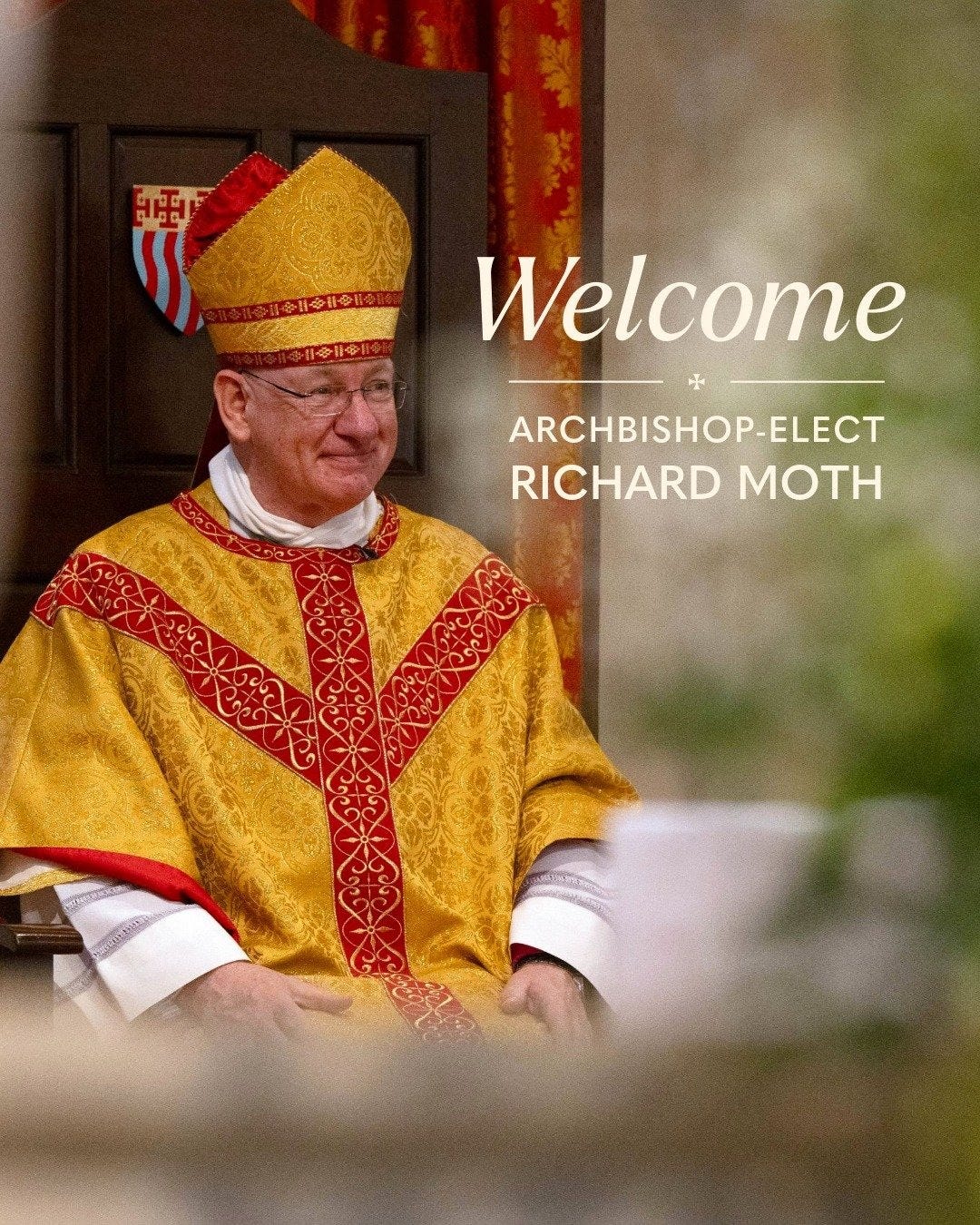
Bishop Richard Moth’s decade as Bishop of Arundel and Brighton has been characterised by solid administrative leadership, careful governance, and a sustained emphasis on social justice issues. Diocesan finances have remained broadly healthy, governance structures robust, and the diocese has avoided the kind of public crises that have so badly damaged trust elsewhere. In purely managerial terms, his tenure can reasonably be described as competent and stable.
This steadiness, however, is inseparable from a particular ecclesial vision, one that has shaped Catholic leadership in England and Wales for over half a century.
Moth’s most visible pastoral emphasis has been on criminal justice, prison ministry, and advocacy for the marginalised. This work is sincere, pastorally motivated, and rooted in genuine Catholic concern for human dignity. It also aligns very closely with the dominant priorities of the Francis era and, more broadly, with a social-justice-forward approach that emerged in the Church during the 1970s.
That approach was not without good intentions. It sought to make the Church credible in a rapidly secularising society by foregrounding her moral concern for the poor, the excluded, and the vulnerable. But intentions are not outcomes, and after fifty years the results are now difficult to ignore.
While social justice initiatives expanded, core ecclesial functions quietly atrophied. Vocations declined. Catechesis thinned. Evangelisation became tentative, often embarrassed by its own claims. Parishes learned to speak fluently about structures of injustice while struggling to articulate the Creed with confidence.
