


I have just returned from the Chartres Pilgrimage organised by Notre-Dame de Chrétienté, now in its 43rd year. This year’s theme was mission, and the pilgrimage saw its largest number of pilgrims yet. A sign, perhaps, that the future of the Church belongs not to accommodation, but to conviction; not to novelty, but to tradition. The remarkable growth of the Chartres Pilgrimage suggests something important about the spiritual condition of modern man.
Each year, thousands of pilgrims walk from Paris to Chartres Cathedral under considerable physical strain: heat, exhaustion, discomfort, and prayer carried over three long days. Outwardly, it appears almost irrational. Modernity has spent centuries attempting to reduce precisely these forms of hardship from human life. And yet the pilgrimage continues to grow. This is discombobulating for those absolutely commited to the view that modernity has all the answers.

Modern society has become extraordinarily effective at eliminating inconvenience, but rather less successful at answering the deeper questions of human existence. We have become materially comfortable while remaining spiritually restless. Indeed, one could argue that the modern crisis is not fundamentally political or economic, but anthropological. We no longer know what the human person is for.
The contemporary world proposes comfort as the highest good:
instant gratification instead of discipline, self-expression instead of self-mastery, consumption instead of contemplation. Suffering, in particular, is treated as something wholly meaningless, an intrusion to be managed technologically, medically, or psychologically wherever possible.
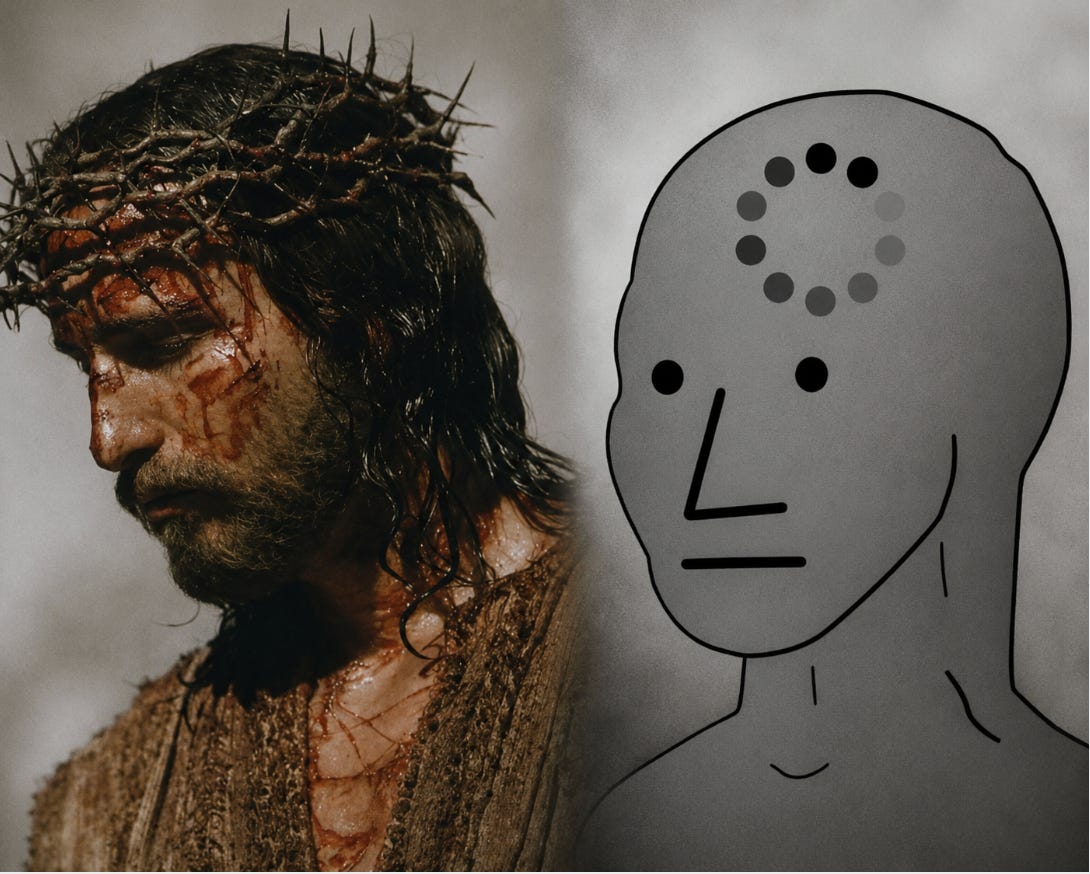
But Christianity proposes something far more demanding and far more hopeful. It insists that suffering may become meaningful when united to the cross. This is what the pilgrims of Chartres seem instinctively to understand.
