


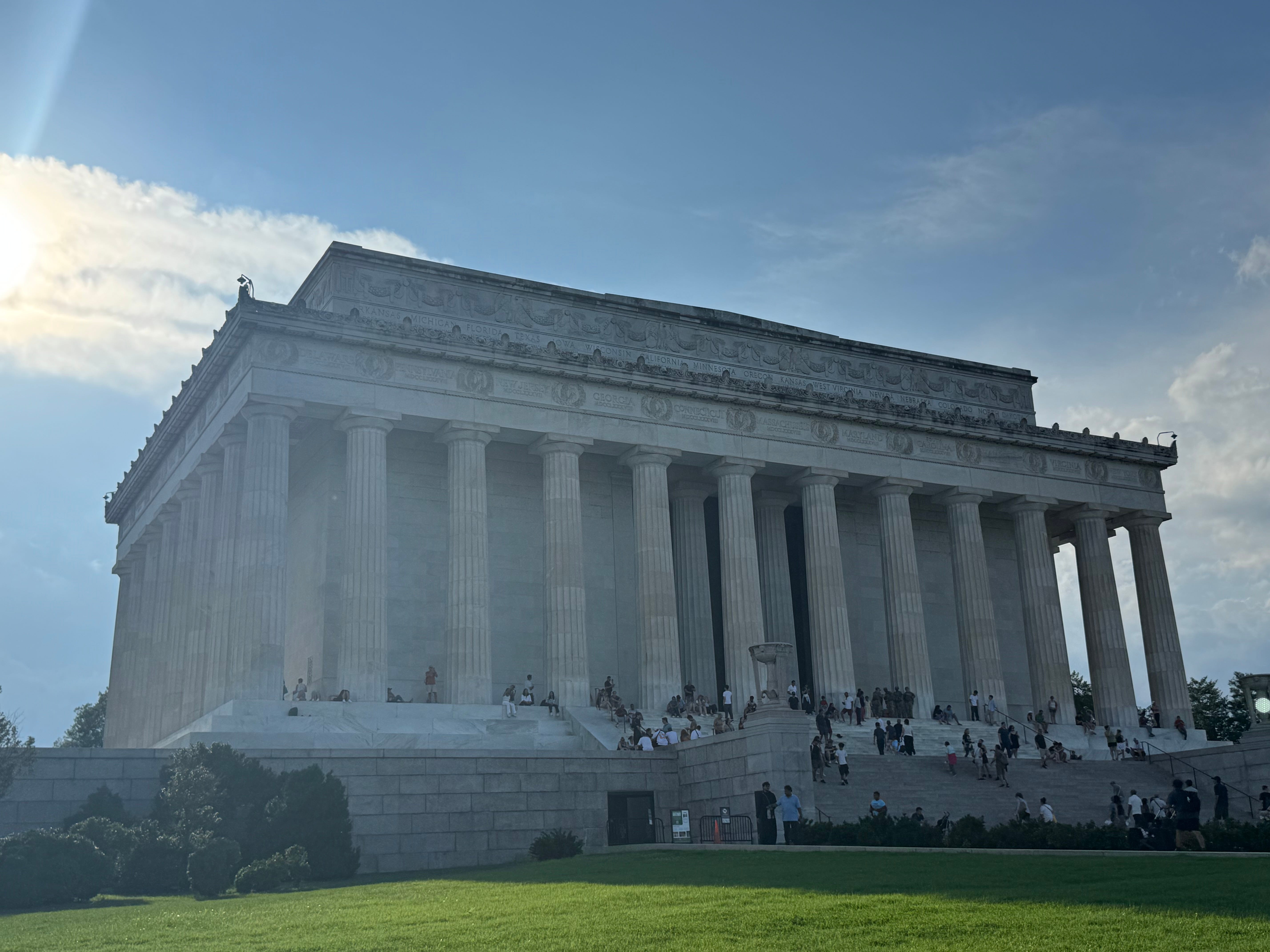
The Lamberts and the Bennetts arrived in Washington, D.C. last Saturday evening, and perhaps appropriately for a group of Catholics coming to America, one of our first stops was the Basilica of the National Shrine of the Immaculate Conception. It is an extraordinary place: the largest Catholic church in North America, with more than 80 chapels and oratories and an astonishing collection of contemporary ecclesiastical art. There is something almost defiantly Catholic about its scale. In the capital city of a nation whose founding fathers loom large, here stands this enormous shrine to our Our Lady. Reminding us, should hubris take hold, of the right response to God.
From Washington we travelled into Maryland and visited the National Shrine Grotto of Our Lady of Lourdes before spending several wonderful days on a nearby farm with a number of Catholic families whom we have come to know well over the years
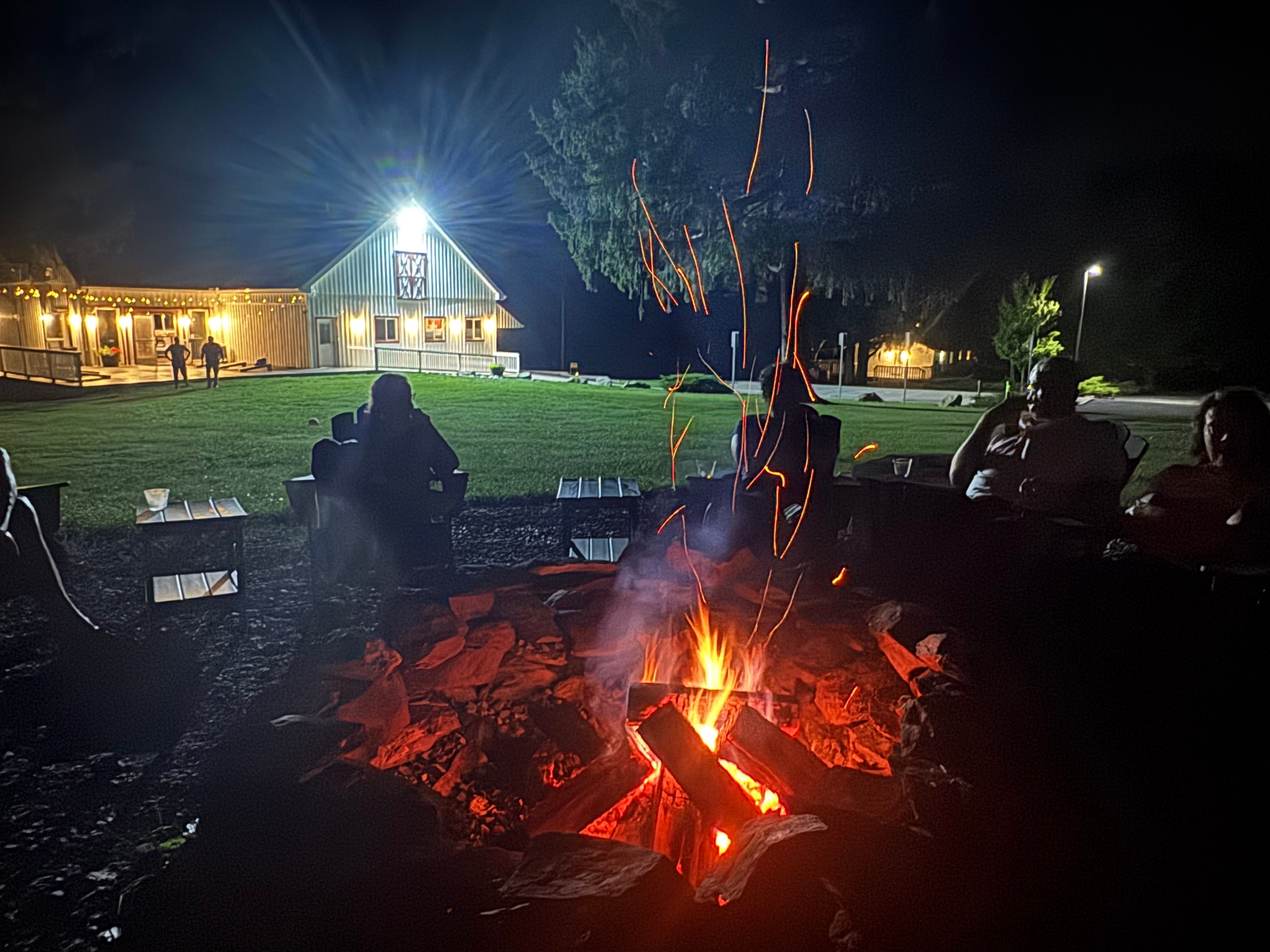
.Those few days provided a rather different picture of America.
Each morning began with Mass. As the sun went down, one of the three priests staying with us would lead the Rosary as we walked around the grounds. There were twelve young people, ranging in age from two to twenty-two. They produced a remarkably clever political skit for the adults, entertained us with musical instruments and spent hours running around outside, looking at one another, immersed in God’s playground, rather than artificial screens.
There was something wonderfully countercultural about it all: families, Mass, children, music, conversation, prayer and the natural world. If this was America, there was a great deal to love.

Then it was back to Washington.
Through a Catholic connection in the States, we were fortunate enough to be given a private tour of Capitol Hill. It is undeniably impressive. But walking through the Capitol also brought home something that is easy for a British Catholic visitor to forget. America may now have a substantial and influential Catholic population, but it was not born Catholic.
The religious culture of colonial America was overwhelmingly shaped by British, Dutch and German Protestant settlers, with Anglican, Puritan and other Reformed traditions playing a formative role. Protestant assumptions influenced education, civic organisations and ideas about the relationship between the individual, Scripture and authority.
Before our trip, as a devoted listener to The Rest Is History, I had listened to Tom Holland and Dominic Sandbrook discussing America’s Founding Fathers. What struck me once I was actually in Washington was the extraordinary reverence in which these men continue to be held - by American Catholics as well as Protestants.
For a Catholic, that relationship with the founding story is not entirely straightforward.
Catholics faced serious legal disabilities and hostility in parts of colonial America, although Maryland had a distinctive Catholic foundation and periods of toleration. The position changed dramatically with the great waves of Catholic immigration during the nineteenth and early twentieth centuries. Millions of Irish, Italian, Polish and other Catholic immigrants arrived, building churches, schools, hospitals and charitable institutions.
They also encountered fierce opposition.
The nineteenth-century ‘Know-Nothing’ movement portrayed Catholic immigrants as fundamentally un-American. Later, the Ku Klux Klan directed its hatred not only towards black Americans and Jews but also towards Catholics. Again and again the accusation was the same: Catholics could not really be loyal Americans because their ultimate religious allegiance lay with the Pope in Rome.
Over time, Catholics moved from a persecuted immigrant minority into the American mainstream. John F. Kennedy’s election as America’s first Catholic president in 1960 represented an extraordinary breakthrough. He didn’t last long. Joe Biden became the second. Some might say he’s lasted too long!
Today Catholics make up roughly a fifth of the American population and have reached the highest levels of American political and judicial life. But assimilation raises a question of its own.
At what point does successful integration become accommodation?
This question is much older than the United States.
When Catholic missionaries travelled into the great non-Christian civilisations of Asia, they confronted a problem which has never entirely disappeared: how much of the surrounding culture can Christianity accommodate in the interests of evangelisation before Christianity itself begins to be changed?
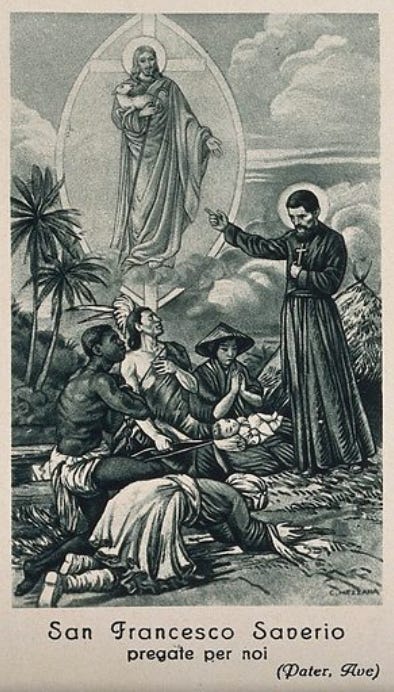
Jesuit missionaries such as Matteo Ricci in China and Roberto de Nobili in India attempted remarkable forms of cultural accommodation. They believed that certain indigenous customs could be distinguished from religion and incorporated into Christian life. Their Dominican and Franciscan critics were considerably less convinced.
What one side regarded as intelligent evangelisation, the other feared was syncretism.
The dispute eventually reached Rome. During the Chinese and Malabar Rites controversies, successive papal interventions placed increasingly strict limits upon accommodation of practices judged incompatible with the Catholic faith. The underlying principle was important: Christianity could enter a civilisation, adopt what was genuinely compatible with the faith and baptise what was good, but it could not simply absorb religious practices or philosophies which contradicted what Christianity claimed to be true.
And that brings us back to America. It’s one thing to respond to demonstrably Pagan nations, but how does the Church respond to an ostensibly Christian nation that nevertheless established itself upon principles of protest?
