


10 years ago I, and much of the world, watched The Night Manager, a TV serial based on the 1993 novel by John le Carré. By the time the second series premiered earlier this year, the only thing I could recall from the first was that Bertie Wooster had turned international arms dealer. For this reason I chose not to pick up where 2016 had left off, until, that is, I had the prospect of a 10 hour flight to Florida ahead of me.
And so, with series downloaded, a large glass of white wine in hand and prayers said. I pressed play.
At first it was merely diverting. I struggled to remember who anyone was, how we had arrived at this point, and why Tom Hiddleston couldn’t find a shirt that fits. I knew what would help: more wine.
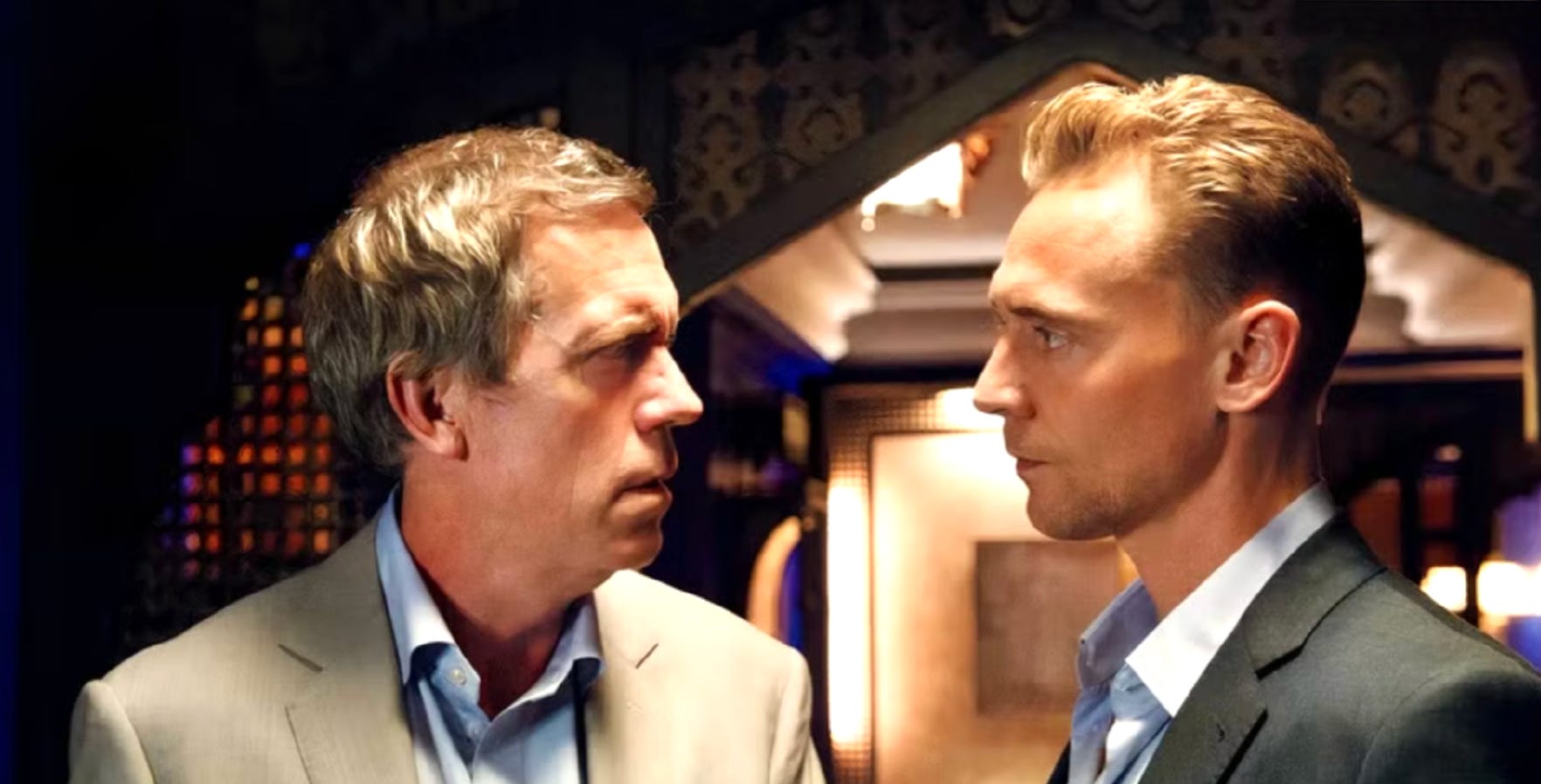
As the episodes went on, and the discomfort around being in a 600 tonne metal box 40,000 ft in the air started to ease I stopped worrying about Hiddleston’s wardrobe and began to enjoy the action. In the penultimate episode Hugh Laurie’s improbably charming villain (Roper) makes an offer he hopes Tom Hiddleston (Pine) and his very tight shirt won’t refuse.
‘Im going to make you an offer. Chaos and carnage will ensue, more guns will be needed, more money, more young flesh. You cant prevent it so stop trying. Instead….you disappear and I wire you 50 million dollars. No one knows you’re here. Start your life again”
“Why would I do that?”
“To be a free man”
“If you came here to win my soul, you can forget it”
“I came here to offer you the world, it’s at your feet, just bend down and pick it up”
“You can’t offer me the world….you’re just a conman, even when you’re stretched out stone cold dead on a slab of Syrian concrete you’re lying. Why should I believe a word you say?”
“Because you dream of me every night, just as I dream of you”
“Yesterday a good man was murdered….I failed to stop it, I won’t fail again”
“Ah! Conscience and shame, the shackles of slaves”
“Conscience is what makes us human”
“Did your father teach you that?”
“Yes he did”
“Is that what led him to a pointless death on a street in Belfast, blown to bits by his selfless commitment to service”
(Pine grabs a knife)
“Go on Jonathan, do it, stick it right through my heart....but before you do it, know this. Your father’s values are dying. Mine are in the ascendent”
“My father loved me. What about yours?”
Silence
Whether the writer is Christian or not, I don’t know, but the Christian undertones running through this whole conversation are inescapable.
It is difficult not to hear the echo of another offer, recorded in Luke’s Gospel:
“The devil led him up to a high place and showed him in an instant all the kingdoms of the world… ‘I will give you all their authority and splendour.’” (Luke 4:5–6)
Evil presents itself not as brutality, but as opportunity. In a scene that only lasts a few minutes Pine is offered material comfort and freedom from consequence. The price? Just look the other way. Don’t challenge evil, don’t try and stop evil, don’t even feel bad about evil; it will happen anyway, so why not make yourself comfortable, let it be someone else’s problem, save yourself!
But this is a lie.
In our Baptismal promises we say the words:
“I renounce Satan, and all his works, and all his empty promises”
Here Pine exposes the emptiness of the deceit and recognises the temptation as an attempt to purchase that which is infinite in exchange for finite things. This is an offer made to all of us each day, and the armour Pine uses to resist is an armour we all have. Conscience.
Conscience is not an independent and exclusive capacity to decide what is good and what is evil…Conscience is the witness of God himself, whose voice and judgment penetrate the depths of man’s soul.
Veritatis Splendour 60
At this, Roper scoffs. Conscience, he suggests, is merely the residue of a dying moral world, the sentimental inheritance of weaker men. His own values, he insists, are in the ascendant. And he’s not entirely wrong.