


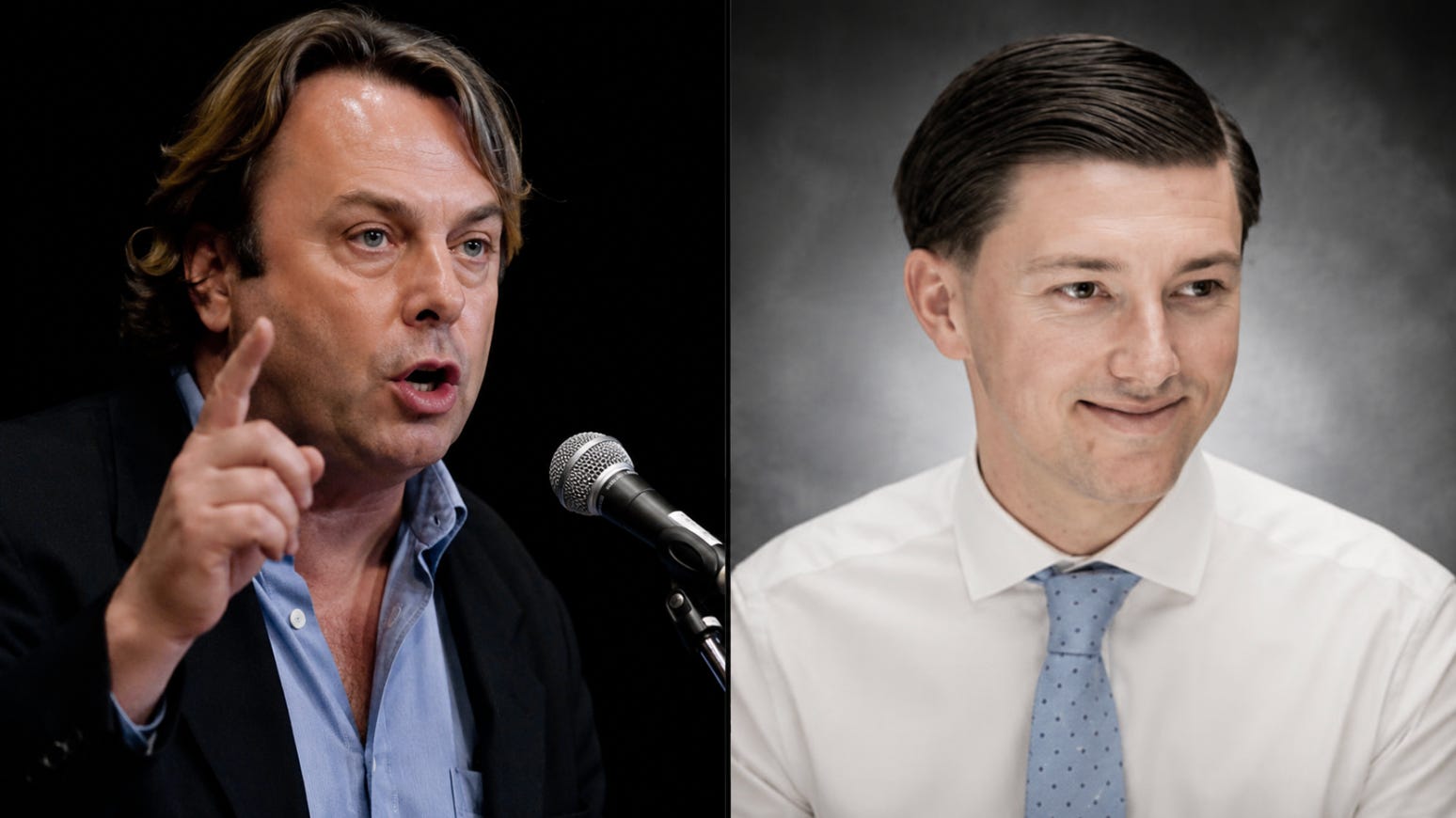
Written by Dr. Anthony McCarthy for Catholic Unscripted
The late Christopher Hitchens, as he toured America to promote his brand of atheism, used to pose a question to his benighted audiences:
“Can you think of a single good act done by a religious person that could not also have been done by a non-religious person?”
Like Pilate, he didn’t wait for an answer, before declaring that no-one could give a satisfactory one. The answer he didn’t wait for would have needed to refer to actions of a religious kind – discerning a vocation, dying for the faith and so on – which Hitchens would no doubt have seen as foolish simply qua religious, thereby begging the question. Yet any pause would have delayed the stentorian delivery of his follow-up question:
“Can anyone think of an evil action performed precisely because of religious faith?”
The truth that question seeks to elicit was expressed more eloquently by the saintly Blaise Pascal and is not one that should bother serious believers, not least because it is obvious that any powerful source of human motivation can effectively be put in the service of evil.
This is even more true of ideologies which seek to suppress moral conscience in the name of an unforgiving non-moral source of inspiration – of the kind Hitchens himself promoted throughout his life (including his tiresome, predictable short journey from Trotskyism to NeoConservatism).
Henry Novak Murder
I was reminded of the power of ideology this week watching footage released by the police concerning the murder of the teenager Henry Nowak in the English port city of Southampton. The police had been called by the brother of a Sikh man who had just stabbed Mr Nowak multiple times. The brother told the police a tale of racial abuse and justified self-defence in the face of a “racist attack”. This victim-narrative appears to have been completely accepted by the police officers who arrived at the scene, where they were confronted with the murderer spinning the same tale and a teenager lying on the ground bleeding to death and repeatedly telling the officers he couldn’t breathe.
The bodycam footage from the police, now publicly available, records an officer listening carefully to the murderer’s tale of racial abuse as Nowak lay dying in front of him. Nowak, with blood filling his mouth, was then moved, in violation of basic first aid principles, so that he could be handcuffed by the officer, who responded to Nowak’s telling him that he had been stabbed, “Don’t think you have, mate.”
Faced with a paradigmatic concrete instance of a suffering victim, the police officer’s instinct was first to treat him as invisible and then, when he registered Nowak’s existence, to handcuff him as a ‘perpetrator’. The last words he would ever hear would be a conversation with his murderer about his ‘racism’ together with the reading of his rights as he was placed under arrest. All this was deemed more crucial than calling an ambulance for an obviously seriously injured man.
Institutional racism
How did we come to this? While it is dangerous to try and hang too much on a single distressing case – a besetting sin of political radicals – it is worth asking what might have caused the inhuman blindness of this officer, evidently accustomed to addressing the public as ‘mate’ but not to using his eyes, ears and judgement.
Back in 1993, a young black man, Stephen Lawrence, was murdered by a group of young white men. The police involved handled the case with Herculean incompetence. That incompetence, which carried with it a very strong whiff of corruption, helped make the case a focal point for racial justice activists who sought to explain it all in terms of police racism. The infamous case led eventually to Lord MacPherson’s influential report on the police, which famously branded the police as ‘institutionally racist’.
The report defined institutional racism as follows:
“The collective failure of an organisation to provide an appropriate and professional service to people because of their colour, culture, or ethnic origin. It can be seen or detected in processes, attitudes and behaviour which amount to discrimination through unwitting prejudice, ignorance, thoughtlessness and racist stereotyping which disadvantage minority ethnic people.”
That same report stressed that racist incidents “should be recorded and investigated as such, when they are perceived by the complainant or someone else as acts of racism.” At the time the Report was published some commentators on the political right condemned such directives (though many of the same writers are happy to cite similar reports on ‘antisemitism’ which make reckless use of subjective criteria for identifying ‘incidents’).
The Macpherson Report embedded in the culture the idea of ‘institutional racism’, making use of the idea of structural racism. This did not come out of a clear blue sky.
