


It has always been the role of the Church to both anticipate and respond to the needs of the world.
By adopting Greek philosophical language in the New Testament, She provided for herself the infrastructure for addressing the Christological controversies of the following three centuries. By moving away from cities and forming communities centered on prayer and work, She preserved ancient culture after the Fall of Rome until it could slowly be rebuilt into the Middle Ages. By facilitating the construction of higher-learning in the Middle Ages, laying the intellectual foundations for the week-rounded, scholarly “Renaissance Man,” She prepared missionaries of the Church for the upcoming “Age of Exploration.”
A student of Church History can see how the Church continually draws from Her past in order to prepare Her children to ensure the world’s future.
One finds a similar posture by the Church as we move into the age of Artificial Intelligence. With technology progressing to the point of apparently replacing the distinctly human acts of thinking, reading, and writing, one notices movements within the Church that will witness to the grace-filled natures of these activities.
The Church Calls for Writers
Besides the wave-making encyclical on AI, Magnificus Humanitas (MH), by Pope Leo XIV, issued on 15 May 2026, there is also his address to writers (AW) on 24 June 2026 that builds upon some of the general principles of MH.
In his address to writers, Leo alludes to themes that one can find in the heroic Christian lives of the Saints. Like any other vocation, God uses the art of writing as a way to bring people, both the writer and the audience, to Christ.
The Saints, more than anyone, participate in the Source of Truth, and, “Writing…is an act of truth” (AW). Saints also represent unique members of the “Body of Christ” (1 Cor 12:27), thereby revealing something unique about God in their lives. Writing, according to Leo, “reveals who we are, what we believe and hope for,” and when it participates in truth, reveals “our inner dialogue with God” (AW).
Grace Reveals and Elevates
Similar to Leo’s emphasis in MH about the importance of distinctly human creation, in his address to writers he calls “writing…an act of humanity” (AW). What is significant about this address is that Leo was referring to writing that was both fictional and not explicitly theological. Yet, he says this “writing concerns God. It may seem a bold claim to make, but several theologians have reflected on and written about the harmony between the art of writing and the revelation of the biblical God” (AW).
This reflects the common refrain of the Catholic faith that humanity’s work of reason does not conflict with faith, but is completed by faith. One can find a similar sentiment in humanity’s natural virtues of prudence, temperance, justice, and fortitude, which are informed and fulfilled by the theological virtues of faith, hope, and charity. Leo writes that “divine grace can make the promise of consolation and peace resound” (AW). When the writer seeks to participate in the Source of Truth, the truth is revealed in his writing.
Though the timing of this address is poignant, popes often speak to specific professions to exhort and encourage, as well as instruct them on how they uniquely edify God’s kingdom. What stands out even more are the movements that are happening outside of Rome in the acknowledgment of holy writers for their writing itself.
Saintly Writers Recognized
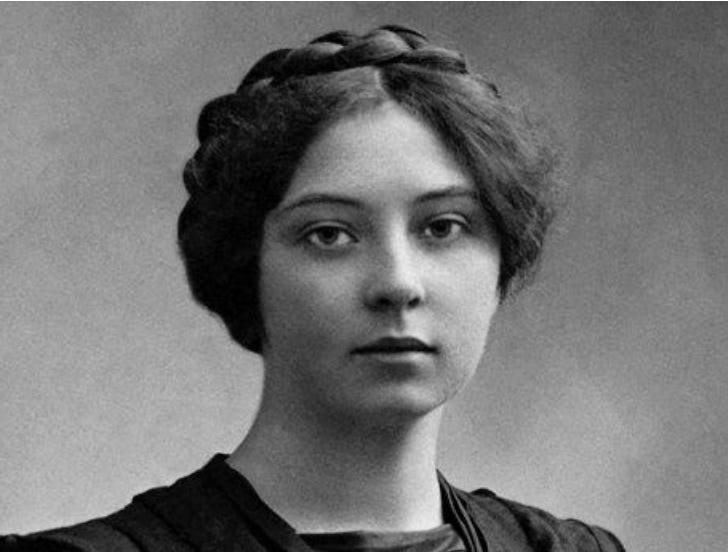
Also recently, the cause for canonization of Sigrid Undset was opened by the Bishop of Oslo. Like any potential canonized saint, this move acknowledges her entire life of heroic virtue and cannot be reduced to merely a recognition of her abilities as a writer, albeit a Catholic writer. She lived a life of heroic virtue outside of her writing, but like any other Saint, her vocation was not extrinsic to her virtue or her holiness. Her writing was integrated with her virtue. This is true of everyone for any vocation. God does not give you a vocation in spite of your personality, interests, circumstances, but in conjunction with them.

