


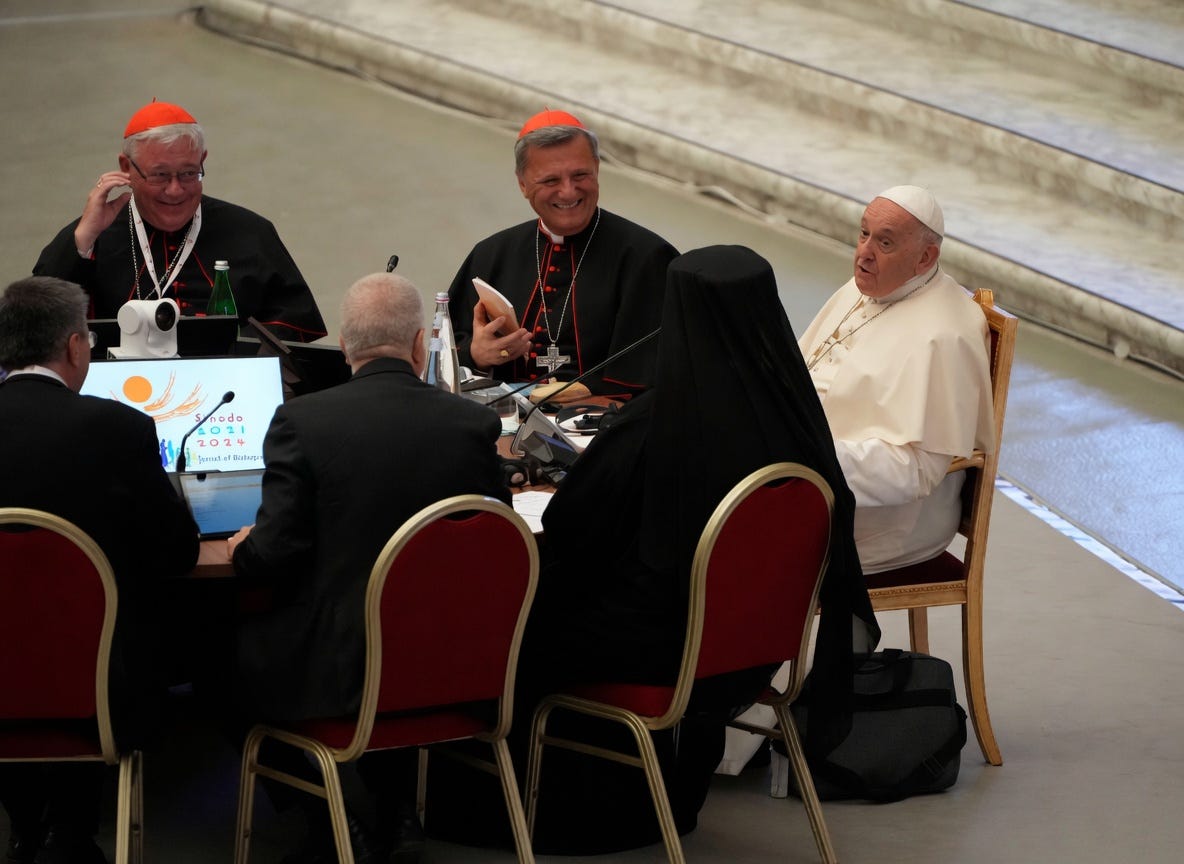
There are moments in the life of the Church when documents tell us far more than their authors intend. Study Group 9’s final report on “controversial doctrinal, pastoral and ethical issues” is one such text. Read superficially, it appears tentative, procedural and inconclusive. Read carefully, it reveals an entire theological method, an ecclesial instinct and perhaps even the fading atmosphere of a particular pontificate. What we may be witnessing is not the future of the Church under Pope Leo XIV, but the final great exhalation of the Francis synodal machine before a new mood descends upon Rome.
The report itself never openly denies Catholic doctrine. This is precisely why it is so revealing. The language of rupture has largely disappeared from progressive Catholic discourse because direct contradiction has repeatedly failed. Instead, the method has changed. The new strategy is not confrontation but destabilisation. Dogma is not rejected outright but softened through process, reframed through experience and dissolved into perpetual discernment. The result is a kind of ecclesial double speak in which no doctrine is formally overturned, yet every doctrine is rendered porous through qualification, ambiguity and the endless invocation of “lived experience”. Honestly I do not know how they had the chutzpah to publish this drivel.
The section concerning homosexuality exposes this method with unusual clarity. The report gives privileged space to testimonies from individuals in same sex relationships who openly reject the Church’s traditional anthropology. One testimony describes homosexuality not as a cross, temptation or disorder requiring chastity and conversion, but as “a gift from God” (!!!). Another speaks of a same sex civil marriage as a source of grace and fidelity (!!!!!). These are not merely illustrative anecdotes. They function within the document as theological data points, shaping the framework through which doctrine itself is expected to be reconsidered.
More striking still is the report’s explicit criticism of what it calls the application of “pre-packaged” doctrine to concrete situations. Here the deeper issue finally comes into view. The real battle is not over one particular moral teaching. It concerns the very nature of Catholic revelation itself. Is doctrine something received from Christ and faithfully transmitted by the Church through Scripture and Tradition, or is it something continually reconstructed through the prism of contemporary human experience? Does the Church teach eternal truths to a changing world, or does the world gradually teach the Church how to reinterpret herself?
This is why so many Catholics instinctively recoil from the report even if they struggle to articulate precisely why. The unease is not simply moral or political. It is metaphysical. The document often reads less like Catholic theology and more like therapeutic sociology. The language of sin, repentance, chastity and conversion recedes into the background while the vocabulary of recognition, accompaniment, visibility and affirmation steadily expands to occupy the centre.