


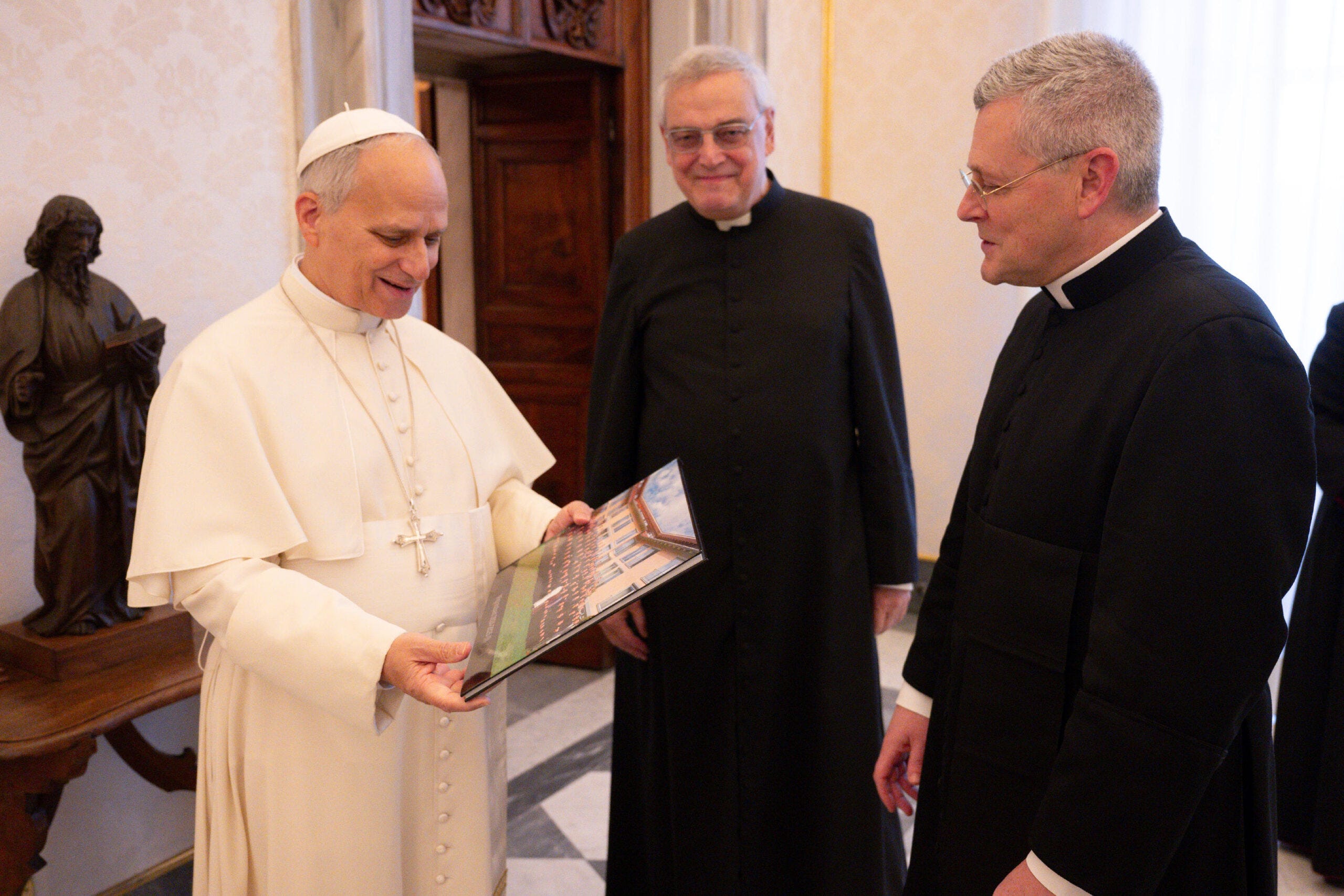
The recent audience between Pope Leo XIV and the leadership of the Priestly Fraternity of St Peter seems to have been widely interpreted as a signal moment in the unfolding relationship between the new pontificate and the traditionalist world. Commentators sympathetic to the traditional liturgy appeared to have broadly framed the meeting as evidence of personal interest, even friendship, while others have suggested it marks a tentative thaw after years of tightening restrictions under Traditionis Custodes. A closer reading of the available evidence, however, suggests a more modest and procedural reality, one that is nevertheless revealing precisely because of its restraint.
For those who find these acronyms somewhat confusing, the Priestly Fraternity of Saint Peter is a clerical society of apostolic life of pontifical right, founded in 1988 to serve priests and faithful attached to the liturgical and spiritual traditions of the Roman Rite as they existed prior to the postconciliar reforms. It was established in full canonical communion with the Holy See, with the explicit purpose of preserving the traditional Latin liturgy and sacramental life while remaining obedient to the Roman Pontiff and the diocesan structures in which it operates. The Fraternity’s charism is fundamentally pastoral rather than ideological, aimed at the sanctification of priests and the care of souls through the celebration of the traditional Mass and sacraments, preaching, catechesis, and parish ministry, all conducted within the juridical framework of the Church and under papal authority.
The first point that must be established with clarity about this papal audience is the initiative for the meeting itself. Contrary to the impression created in some reporting, including the suggestion that this was a clear act of papal outreach, the Fraternity’s own official communiqué states explicitly that the audience took place following a request presented by the Superior General, Fr John Berg. This is not a minor detail. In Vatican terms, the difference between an unsolicited papal invitation and a granted audience following a request is substantial. The latter is a normal exercise of papal governance and pastoral availability, especially toward institutes of pontifical right that find themselves under pressure or uncertainty. It does not, in itself, signal a shift in policy, still less a contradiction of existing law.
The content of the meeting, as described by the FSSP, reinforces this interpretation. The purpose of the audience was to present the Fraternity’s foundation, history, apostolates, proper law, and charism, and to evoke certain misunderstandings and obstacles encountered in various places. The language here is carefully chosen and notably non-confrontational. There is no reference to demands, negotiations, or appeals against specific dicasterial decisions. Instead, the emphasis falls on explanation and clarification, with the Pope posing questions and the Fraternity responding. This is the posture of an institute seeking to ensure that it is understood accurately at the highest level, not that of a movement receiving endorsement or reassurance in public policy terms.
The absence of specificity is itself telling. The communiqué does not enumerate the obstacles mentioned, nor does it identify the misunderstandings raised. This silence suggests that the Fraternity wished to keep the discussion discreet and that no concrete outcomes were agreed upon that could be responsibly disclosed. The only tangible action attributed to the Pope is the imparting of his blessing at the conclusion of the audience, a gesture that is pastoral and universal rather than juridical or programmatic.