


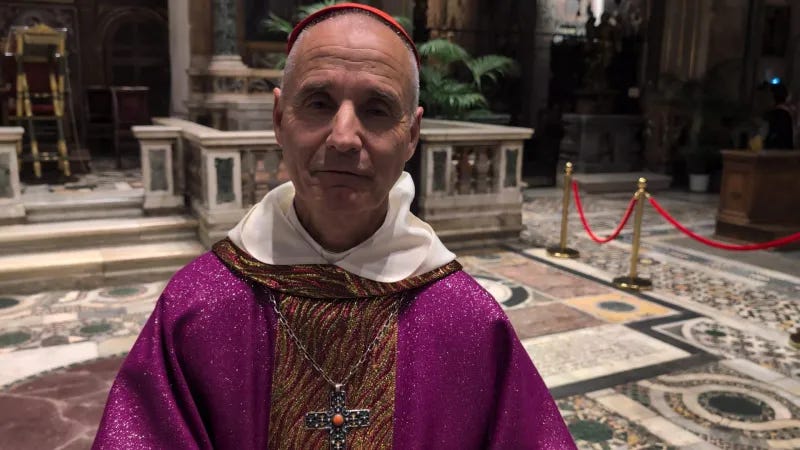
For many Catholics, Dominican Cardinal Jean-Paul Vesco initially appears as an attractive and even compelling figure. Here is a man who has not retreated into ideological tribalism or civilisational bitterness. He has chosen instead to live peacefully as a Christian bishop within the Muslim world, speaking constantly of fraternity, encounter and reconciliation. At a time in history seemingly intoxicated by rage and polarisation, there is something undeniably admirable in such a witness. Perhaps this is why Pope Francis elevated him so rapidly and why many Catholics weary of perpetual culture war instinctively warm to his tone.
Yet it is precisely because Vesco appears humane, intelligent and sincere that the present controversy surrounding his comments (and new book) on homosexuality and the wider direction of Synod Study Group 9 matters so profoundly.
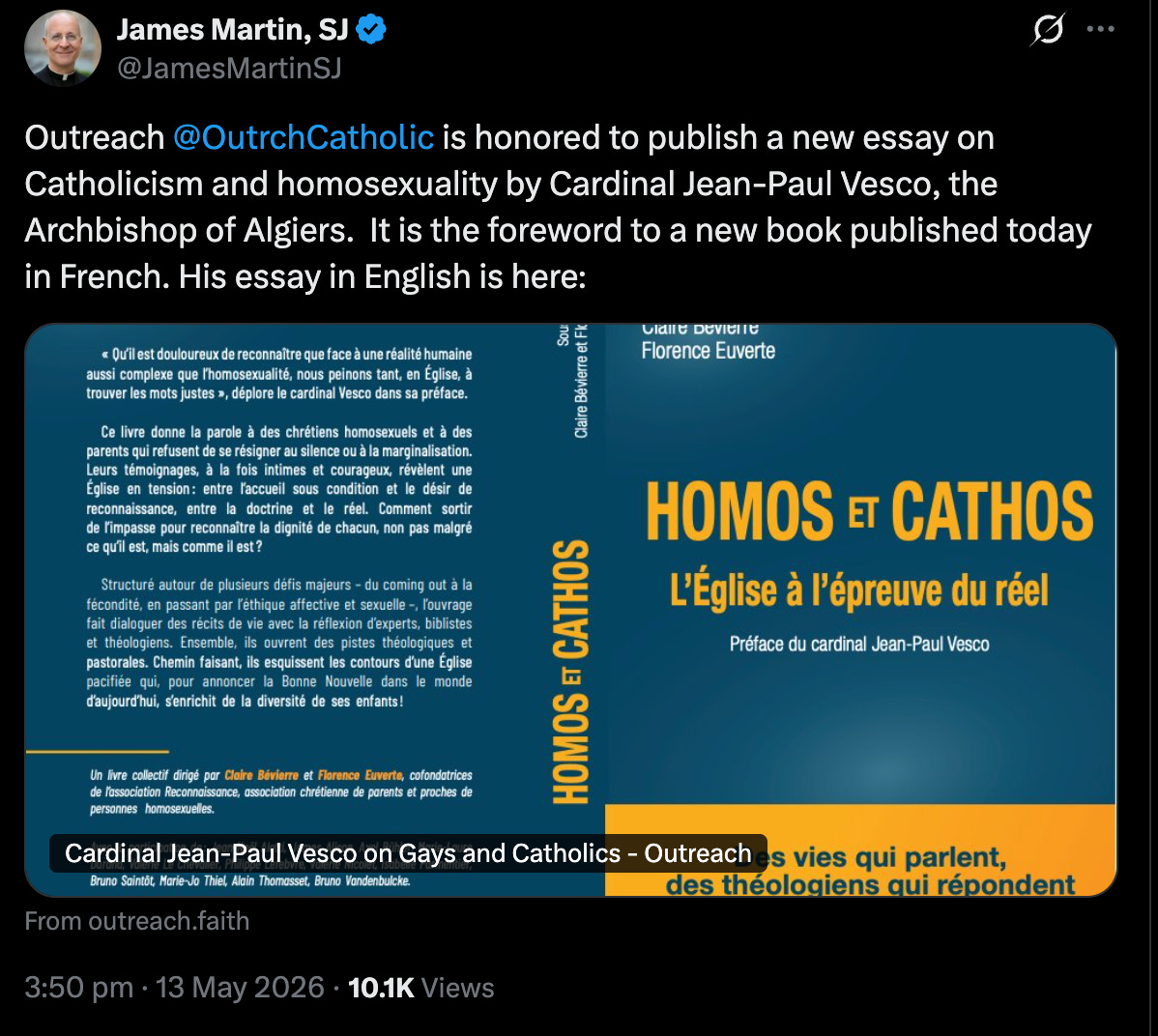
For what is now emerging within sections of the Church is not merely a debate over pastoral tone, nor simply a discussion concerning the best way to accompany persons experiencing same sex attraction. The deeper issue is methodological and theological. It concerns the very relationship between revelation and experience, doctrine and culture, truth and pastoral adaptation. At stake is whether Catholic teaching is something received from Christ through Scripture and Tradition, or whether it may gradually be reinterpreted through the lens of contemporary psychological, sociological and experiential categories.
The tragedy is that this crisis was not unforeseen. Successive popes across more than a century warned repeatedly that precisely such a moment would come.