


There is something deeply Christian in the sight of a Pope standing beside the graves of migrants who perished in the Mediterranean. No Catholic should be unmoved by men, women and children drowning at sea, being trafficked across continents or treated as disposable commodities by criminal gangs. Every human life bears the image of God. The desperate stranger does not in any way cease to possess an immortal soul because he crosses a frontier without the correct papers, I know that I don’t even need to say that to you, dear reader!
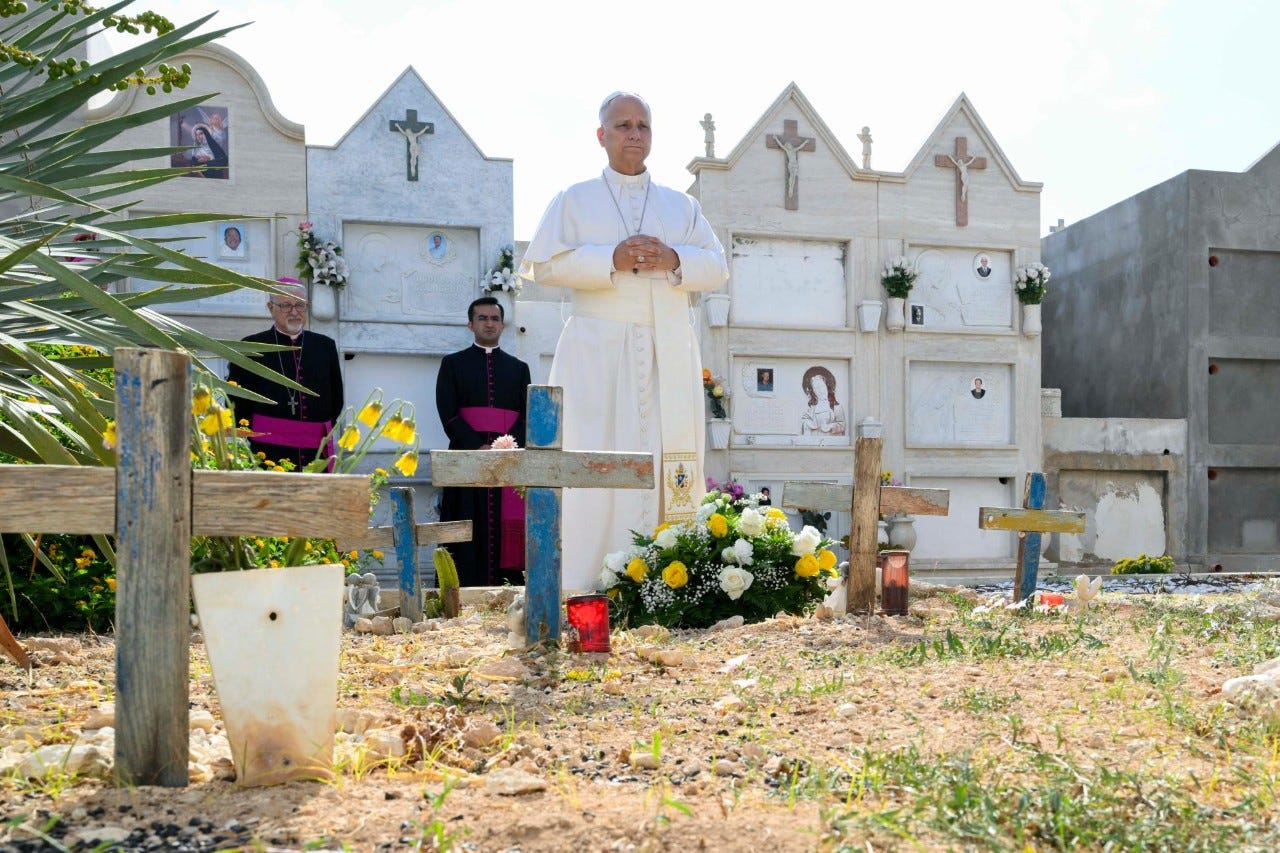
Yet Christian compassion does not relieve us of the obligation to think, as G.K. Chesterton put it, “The church asks us to remove our hats, not our heads, when we enter the church”. Indeed charity demands that we think more carefully, because good intentions detached from prudence can produce consequences that are neither merciful nor just.
This is why Pope Leo XIV’s recent interventions on migration are becoming a cause for concern. The problem is not that the Pope is teaching error. Much of what he says is true, necessary and firmly rooted in the Gospel. TWhat concerns me is that he is repeatedly presenting one part of Catholic teaching with such emotional and rhetorical force that the corresponding part is almost disappearing from view.
At a moment when migration has become one of the most socially explosive questions in Europe and the United States, the Pope speaks eloquently about the dignity of migrants, the duty to welcome, the cruelty of indifference and the need for legal routes. He speaks much less clearly about the right of nations to control their borders, the distinction between lawful migration and illegal entry, the limits imposed by social capacity, the preservation of national culture, the consent of existing populations or the obligations migrants assume towards the countries in which they settle.
This imbalance is disturbing because the West is already dangerously polarised and this issue is one of the key reasons why. Political and cultural elites have promoted multiculturalism, diversity and inclusion while often treating those who question the consequences as morally suspect. Ordinary citizens who express concern about housing, public services, crime, cultural fragmentation or the rapid transformation of their communities are frequently described as fearful, xenophobic or racist. Discussion is not encouraged but closed down. Anxiety is not examined but pathologised.