


On January 3, 2026, the United States carried out a dramatic military operation in Venezuela that resulted in the capture of President Nicolás Maduro and his transfer to the United States to face charges. The action was unprecedented in modern international relations and immediately triggered a wave of global reactions ranging from condemnation and legal warnings to cautious diplomatic restraint. Into this charged atmosphere stepped Pope Leo XIV, whose response was notably restrained, principled, and rooted in moral teaching rather than geopolitical advocacy.
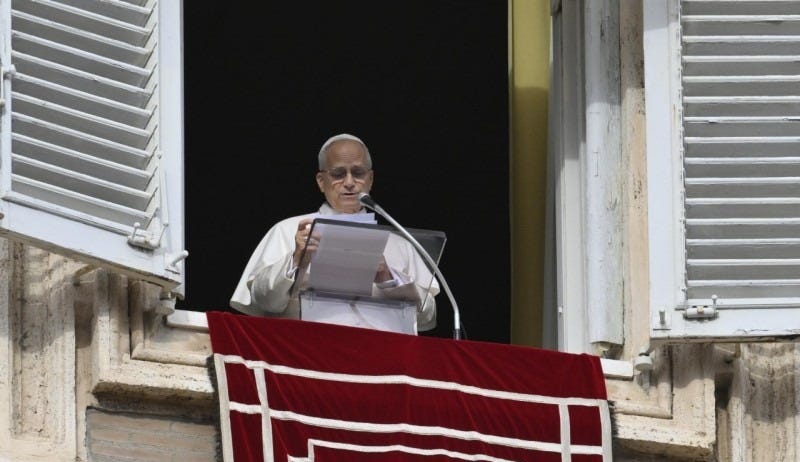
Speaking after the Angelus from the window of the Apostolic Palace, Pope Leo expressed deep concern about the situation in Venezuela. His remarks focused consistently on the good of the Venezuelan people, the need to overcome violence, the importance of justice and peace, and respect for Venezuela’s sovereignty and constitutional order. He stressed the protection of human and civil rights and drew particular attention to the poor, who inevitably suffer most when political crises escalate into violence. Rather than endorsing or condemning the American action directly, the pope invited prayer for Venezuela and entrusted the nation to Our Lady of Coromoto and its saints, underscoring the pastoral and spiritual character of his intervention.
What Pope Leo did not say is as significant as what he did. He did not pronounce on the legality of the U.S. operation, nor did he explicitly demand the release of Maduro or endorse regime change. His response avoided tactical or juridical judgments and instead articulated broad moral principles that apply to all parties. This approach has drawn mixed reactions, with some praising the pope’s restraint and others criticizing what they perceive as moral equivocation in the face of a brutal dictatorship.
The broader international response has been sharp and divided. China condemned the U.S. action as a violation of international law and warned of serious consequences for global stability. Russia described the operation as armed aggression and demanded Maduro’s release, framing the event as an assault on national sovereignty. Iran, North Korea, and several other states echoed these concerns, warning that unilateral military action sets a dangerous precedent. The United Nations Secretary General expressed deep concern and emphasised the importance of adhering to the UN Charter, particularly the principles governing the use of force and respect for sovereign states.
European nations adopted a more cautious tone. France, Germany, and Spain urged restraint and respect for international law while also acknowledging the illegitimacy and brutality of Maduro’s regime. Canada and other Western governments similarly balanced legal concerns with recognition of Venezuela’s humanitarian and democratic crisis. Across Latin America, reactions were shaped by proximity and historical sensitivity to foreign intervention. Brazil, Mexico, Cuba, and Colombia all expressed alarm at the breach of sovereignty and the risk of regional destabilisation, even as many leaders acknowledged the grave failures of the Maduro government.
Within the United States itself, the action has provoked intense debate. For years, U.S. authorities had offered substantial financial rewards for information leading to the arrest or conviction of Nicolás Maduro under federal narcotics and corruption charges, with figures reportedly rising to $25 million and even $50 million under the State Department’s Narcotics Rewards Program. Supporters of the recent operation argue that removing a dictator accused of massive drug-trafficking and human-rights abuses was a long-sought objective, and one that American law enforcement had pursued legally for years. Critics counter that the sudden military capture bypassed constitutional processes and international norms, and they question whether past policy endorsing arrest warrants and reward offers has any relevance to the legality of an extra-territorial raid. They argue that offering a bounty for arrest information does not justify unilateral military action and could expose the United States and its allies to long-term strategic and moral consequences, while potentially undermining the rule of law.
Against this complex backdrop, Pope Leo XIV’s response stands out precisely because it does not align neatly with any political camp. His language mirrors long-standing Catholic teaching on war, peace, and human dignity. The Church has never embraced automatic pacifism, nor has it endorsed the unrestrained use of force. Instead, Catholic doctrine insists on moral limits, respect for sovereignty, proportionality, legitimate authority, and the prioritization of peace. Pope Leo’s comments reflect this tradition by focusing on principles rather than political outcomes.