


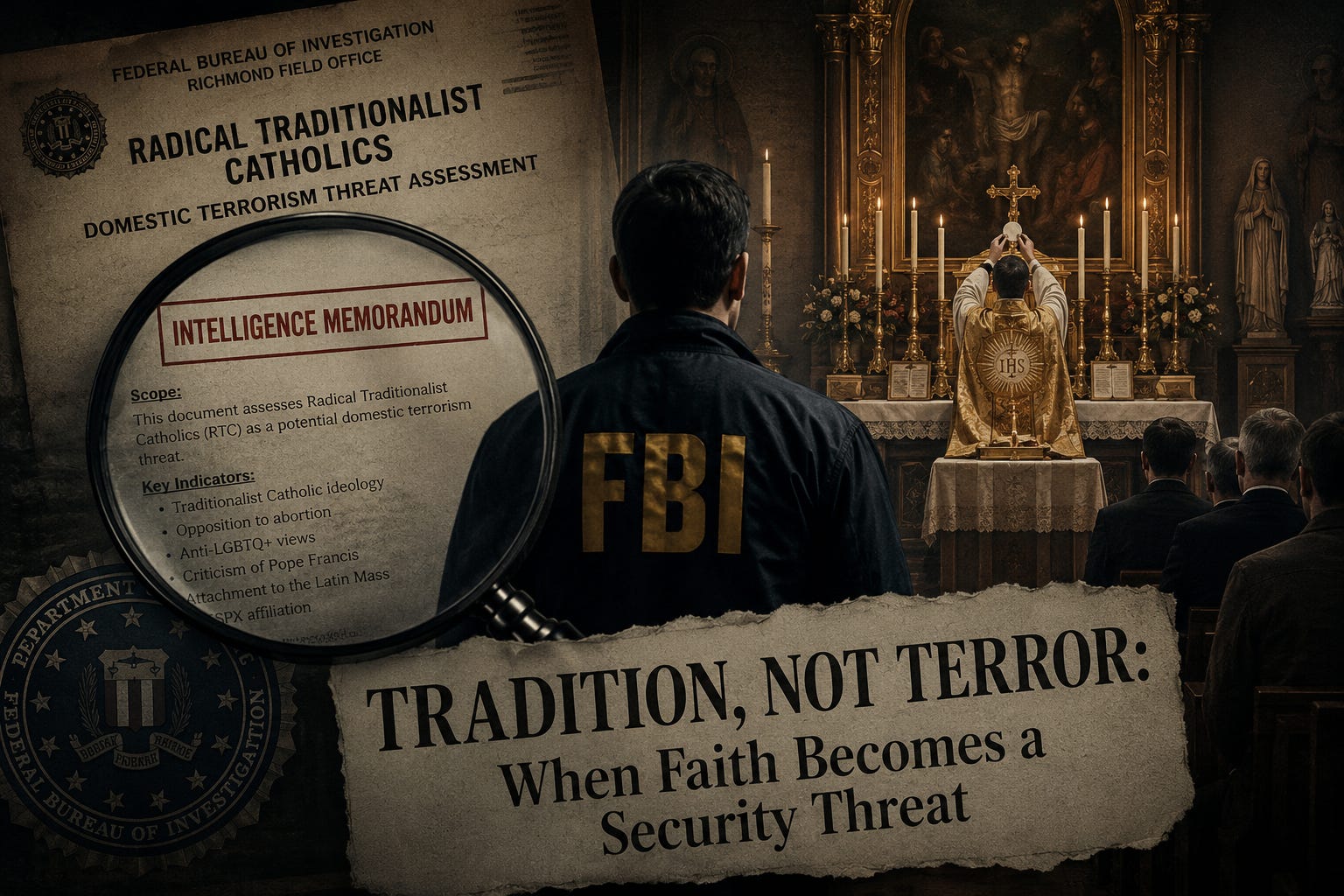
There are moments when a story becomes more significant than the immediate controversy that gave rise to it. The recent revelations surrounding the FBI’s infamous Richmond memorandum on so called “Radical Traditionalist Catholics” appear to be one such moment.
At first glance, the story seems almost absurd. According to information that has emerged through congressional investigations and media reporting, the memorandum was heavily influenced by the case of a disturbed young man with neo-Nazi sympathies who had attended a chapel operated by the Society of St Pius X. This individual, who reportedly suffered from serious mental health problems and made violent threats online, became one of the key reference points in an analysis that sought to identify potential links between traditionalist Catholic communities and domestic extremism.
Had the matter ended there, few would have objected. Law enforcement agencies have both the right and the duty to investigate individuals who make credible threats of violence. That is not controversial. Indeed, it is precisely what citizens expect them to do.
The controversy arose because the focus appeared to shift from the actions of a dangerous individual to suspicion directed towards an entire religious subculture. In the logic of the memorandum, the distinction between investigating a person and scrutinising a community became alarmingly blurred.
