


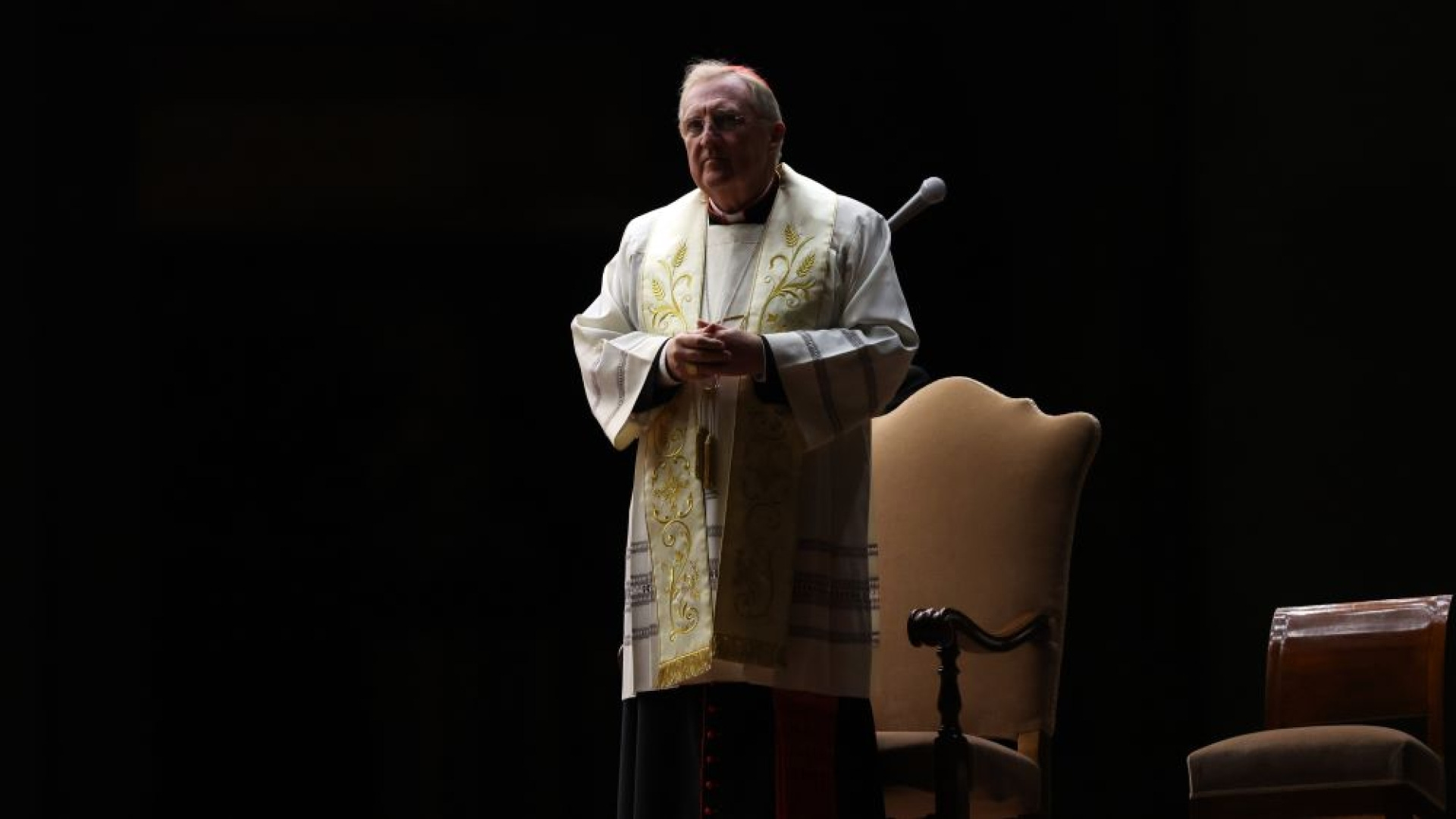
Cardinal Arthur Roche has given a “wide ranging” interview to OSV in which there are a number of rather revealing moments. Reflecting on the continuing controversy surrounding Traditionis Custodes, he asks, with apparent bewilderment, why the debate remains so intense. Why, he wonders, all the noise, when the celebration of the older liturgy is still permitted as a concession. Something else, he suggests, must be going on.
The content is so evidently newsworthy that Niwa Limbu seizes upon in this in his excellent article in The Catholic Herald. Far from defending Roche, Limbu subjects his reasoning to careful scrutiny and in doing so, exposes a series of inconsistencies that go to the heart of the present crisis. Yet even Limbu’s critique, strong as it is, does not fully reckon with the deeper problem. For what Roche’s repeated interventions reveal is not merely a flawed argument, but a persistent failure to grasp the reality he is attempting to govern.
As I have previously shown, Roche is a man who has clearly been promoted way beyond his ability and yet does not have the good grace to recognise the fact. In fact it seems every time he opens his mouth to defend himself, he demonstrates this reality further.
Roche’s puzzlement is the starting point. He wants to know why, why the intensity? Why the resistance? Why the continued attachment to the older form? The answer is not hidden, nor does it require speculation about ulterior motives. It lies in the simple fact that what is now treated as a concession was, until very recently, presented by the Church herself as a good.
Under Pope John Paul II and Pope Benedict XVI, the older liturgy was not marginalised but integrated. John Paul II spoke of the “rightful aspirations” of the faithful. Benedict XVI went further, affirming that the 1962 Missal had never been abrogated and describing it as a “precious treasure” within the Church’s life. He explicitly rejected the idea that its presence would divide the Church. Limbu is entirely correct to emphasise this. The older rite was not treated as a problem to be contained, but as a means of fostering unity.
What has changed is not the liturgy, but the judgment placed upon it. Growth that was once welcomed is now treated as evidence of division. Fidelity that was once encouraged is now viewed with suspicion. When Roche asks why there is “noise,” he is not identifying a mystery, he is simply revealing his own failure to recognise the consequences of the reversal he worked with Pope Francis to enforce.
In the OSV interview, Roche attempts to ground his position in first principles. He invokes St Paul, speaking of what has been received and handed on. Limbu rightly engages this point, noting that previous popes understood the liturgical tradition itself as something received, not as a provisional arrangement subject to withdrawal. Here the argument becomes more serious.
For Roche’s use of “received” operates at a level of abstraction that allows him to bypass the concrete historical reality of the Roman rite. It is true that the Eucharist is received from Christ and entrusted to the Church. It is also true that the Church has authority to regulate the liturgy. But the Roman liturgy, as it developed over centuries and was codified in the Missal, is itself part of that received tradition. To separate the principle from its historical embodiment is to create a gap that demands justification.
That justification is not forthcoming. Instead, Roche reduces the entire post-conciliar history of the older rite to the language of concession. Limbu exposes the weakness of this move by returning to the texts themselves. John Paul II did not speak in terms of reluctant tolerance. Benedict XVI did not describe the older liturgy as a temporary accommodation. On the contrary, he insisted that it formed part of the Church’s lex orandi and could coexist peacefully with the reformed rite.
To describe this as a concession is not simply to summarise. It is to reframe the past in order to support a present policy. Limbu is right to identify this as a distortion.
Yet even here, the deeper issue remains just beneath the surface. For the disagreement is not ultimately about labels, but about what the liturgy does. Roche insists that the problem lies in the misuse of the older form, particularly when it is set in opposition to the reform. He warns against “pitching one rite against another” and calls for moderation. At the same time, he suggests that attachment to the older liturgy may signal a deeper ecclesial problem.
This is where his argument begins to really unravel.