


New Vatican figures reveal that 55 parish churches received new or renewed permission to celebrate the Traditional Latin Mass in 2025. The numbers suggest continuity rather than a reversal under Pope Leo XIV, but they also expose the increasingly strange canonical position occupied by Catholics attached to the older liturgy.
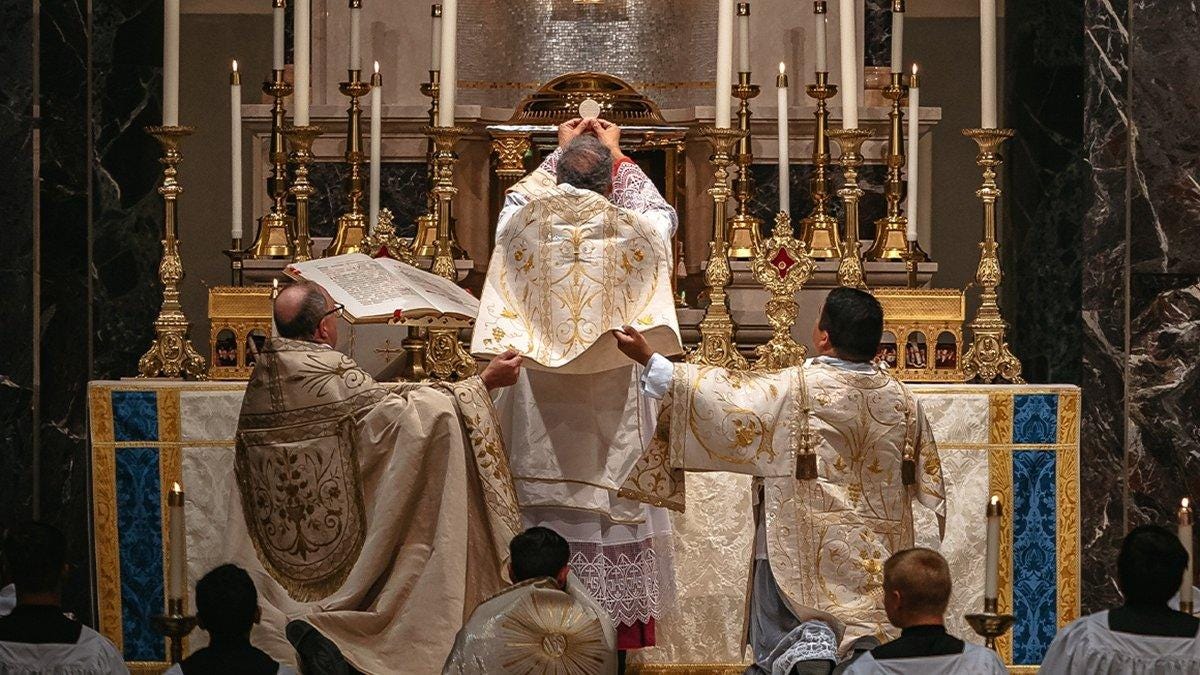
Newly published Vatican records have provided a rare glimpse into how the restrictions on the Traditional Latin Mass are being administered under Pope Leo XIV.
During 2025, new or renewed permission was granted for Mass according to the 1962 Roman Missal to be celebrated in 55 parish churches across 33 dioceses, according to an analysis of the Dicastery for Divine Worship’s Summarium Decretorum by Vatican correspondent Michael Haynes.
The majority were not permissions for entirely new celebrations, but renewals of existing arrangements, generally for another two years. Seven of the relevant decrees were issued while Pope Francis was still alive, with the remainder coming after the election of Pope Leo XIV. (See report here)
On its own it would be impossible to say that this amounts to the beginning of a restoration of the Traditional Latin Mass under Leo. Indeed, the figures are remarkably similar to those for 2024, when around 52 parish churches in 33 dioceses received new or renewed permission. Importantly, these figures from the Vatican do not constitute a census of every Traditional Latin Mass currently being celebrated, they exclude permissions which were not due for renewal during the year, as well as various personal parishes, shrines and churches administered by traditional priestly institutes.
Nevertheless, buried beneath the statistics is something considerably more revealing about the position in which traditional Catholics now find themselves. Under Pope Francis’s 2021 motu proprio Traditionis Custodes, diocesan bishops were instructed to provide locations for Catholics attached to the older Missal, but specifically “not however in the parochial churches”. The Dicastery for Divine Worship subsequently provided a mechanism by which bishops could request an exemption when no suitable church, chapel or oratory was available. Francis confirmed in 2023 that the authority to grant such dispensations was specifically reserved to the Holy See.
But Cardinal Arthur Roche’s December 2021 Responsa ad dubia went considerably further in explaining the thinking behind the restriction. The exclusion of the parish church, the Dicastery stated, was intended to establish that celebration according to the previous Missal “is not part of the ordinary life of the parish community”. Even where Rome permits the Traditional Mass to take place in a parish church, the Responsa states that it should not appear in the parish Mass schedule and should not take place simultaneously with the pastoral activities of the parish. If a suitable alternative venue subsequently becomes available, the permission is supposed to be withdrawn.
The practical significance of these Vatican dispensations becomes much clearer when set against what has happened to traditional Catholic communities elsewhere, particularly in the United States, where two dioceses have recently experienced significant changes to their provision of the older liturgy. In the Diocese of Charlotte, North Carolina, Bishop Michael Martin moved to end celebrations of the Traditional Latin Mass in the four parish churches where established communities had been attending it. His predecessor, Bishop Peter Jugis, had obtained temporary permission from the Holy See allowing those celebrations to continue. Martin’s decision proved particularly controversial because the four affected pastors reportedly appealed to him to seek another extension from Rome. They warned that Catholics attached to the traditional liturgy had often felt “marginalised and discriminated against” and argued that considerable pastoral work had been undertaken to establish trust between these communities and their parishes. Nevertheless, the parish celebrations ended and the diocesan Traditional Latin Mass was concentrated at the Chapel of the Little Flower in Mooresville.
