


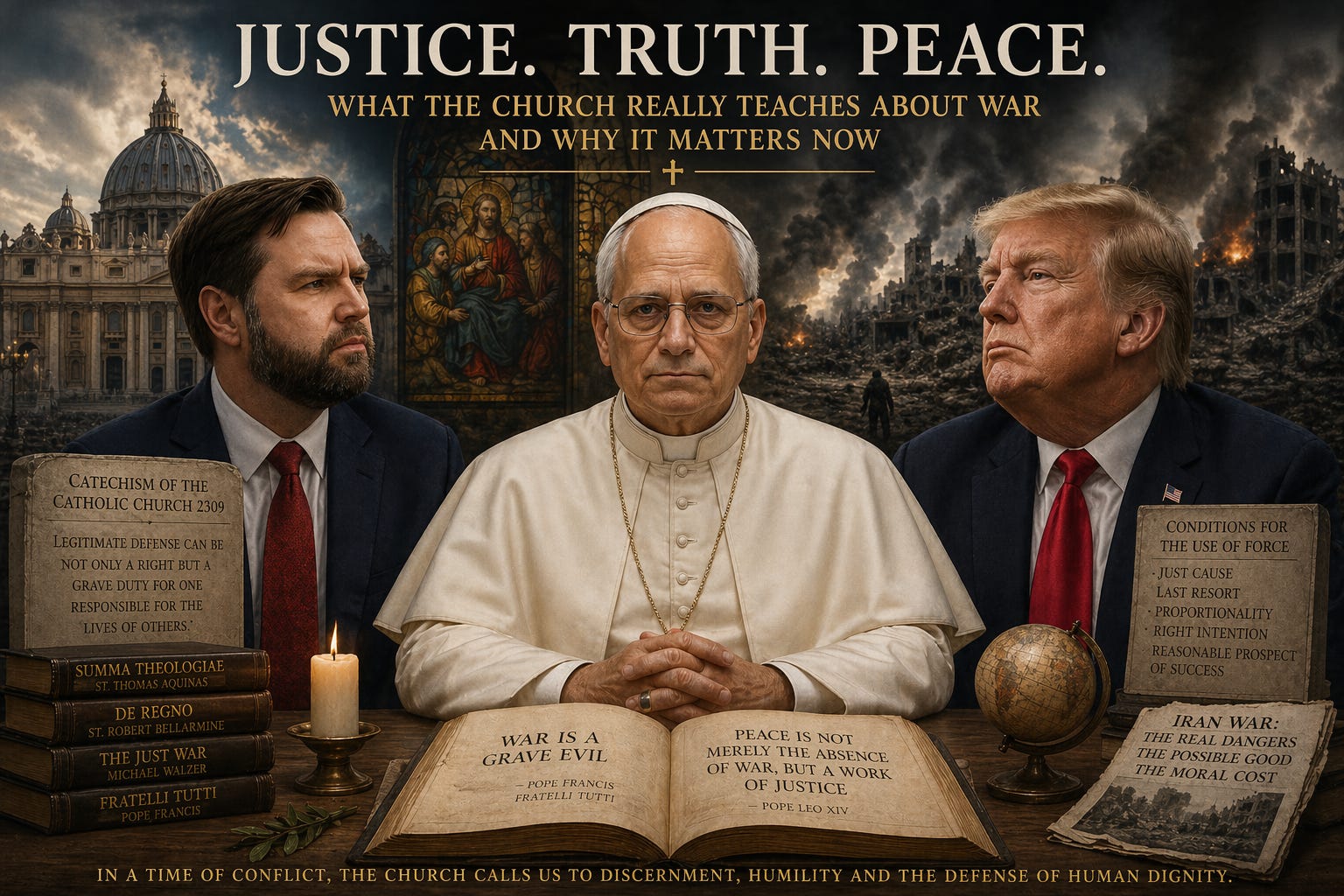
The argument over Iran has exposed a familiar confusion in Catholic public life. One side speaks as though any robust condemnation of war amounts to naïve pacifism. The other sometimes speaks as though any attempt to apply just war reasoning to an actual conflict is already a moral compromise. Neither position does much justice to the Church’s teaching.
The Catholic tradition has never held that all use of force is intrinsically forbidden. Nor has it ever taught that states may clothe their strategic interests in moral language and call the result just. The tradition is, in fact, much sterner than either of those caricatures. It permits the use of force only under exacting conditions because it begins from the conviction that peace is not merely the absence of conflict but the tranquillity of order, the work of justice and a good rooted in the dignity of persons and peoples. This means then that, in any conflict, the burden of proof therefore always rests on those who would wage war, not on those who would restrain it.
That is why the Catechism frames the matter so carefully. Governments may not be denied the right of lawful self-defence, but only once peace efforts have failed. The moral conditions for the use of military force must all be present together. The damage inflicted by the aggressor must be lasting, grave and certain. All other means must have been shown ineffective. There must be serious prospects of success. The use of arms must not produce evils graver than the evil to be eliminated, especially given the destructive power of modern weapons. This is not some sort of algorithm for statecraft, it is instead a moral discipline designed to prevent fallen rulers from calling necessity what is really ambition, fear, vengeance, prestige or ideology.
The deeper reason the Church teaches this way is theological before it is political. Human life is sacred because it is not ours to dispose of. Political authority is real, but it is never absolute. The state is not God and the nation is not the highest good. The Church therefore refuses both sentimentalism and raison d’état. She knows there are circumstances in which the innocent must be defended, even by force, but she also knows that violence easily becomes self-justifying. Modern papal teaching has become more severe on this point, not because the Church has abandoned the classical tradition, but because modern war has made its dangers more obvious. Pope Francis wrote in Fratelli tutti that we can no longer think of war as a solution because its risks will probably always be greater than its supposed benefits. That is not a formal abolition of just war doctrine but it is a warning that the criteria may be far harder to satisfy in an age of mass civilian vulnerability, regional escalation, technological asymmetry and catastrophic weaponry.