


The Holy See has once again called upon the international community to pursue nuclear disarmament, telling the United Nations this week that the work of disarmament cannot simply be postponed until more favourable circumstances arise. Is this a reasonable intervention, particularly in a world where nuclear threats have once again become part of the language of international politics? There is, of course, a formidable argument in favour of nuclear deterrence. Since 1945, the world has managed to avoid another direct war between its principal nuclear powers, and it would be naive to deny that the prospect of mutual annihilation has played a significant part in restraining them. At the present moment we are living at a time when Russia, China and other nuclear powers are expanding or modernising their capabilities, which makes the prospect of complete disarmament seem almost fantastical.
Yet I find myself persuaded that the Holy See must continue to challenge this arrangement, precisely because the Church’s responsibility is not exhausted by the calculations of political necessity. A government has a grave obligation to protect its people against aggression and it may reasonably conclude that abandoning its nuclear deterrent while potential adversaries retain theirs would be dangerously irresponsible. The Church must take that responsibility seriously but she must also insist that a system founded upon the permanent threat of catastrophic destruction cannot be accepted as humanity’s final answer to the problem of war. The fact that nuclear deterrence may have prevented immense evil does not establish that it is morally sufficient, still less that it should become a permanent feature of international relations.
This is where the Church’s prophetic responsibility and her commitment to political realism must meet. She must call nations beyond the logic of mutually assured destruction without pretending that trust can be manufactured by declarations or that disarmament can safely proceed without verification, reciprocity and enforceable agreements. The question, therefore, is not whether the Church should advocate nuclear disarmament. I believe she must. The question is can she do it in a prophetic way that calls people to recognise why this is so important and also whether she can do so while maintaining the careful moral distinctions necessary to guide those who bear responsibility for the security of nations.
Behind the Vatican’s latest appeal lies a rather more difficult theological question, one which illustrates a problem that became increasingly apparent during the pontificate of Pope Francis and which Pope Leo XIV has now inherited. What happens when a pope appears to transform a conditional moral judgement into an absolute prohibition, without adequately explaining how that change can be reconciled with the Church’s previous teaching? The question is not whether Catholics should desire a world without nuclear weapons, that may seem impossibly optimistic, but we have faith that nothing is impossible with God, and so we must maintain that hope. The question is not whether the deliberate annihilation of civilian populations could ever be justified, Catholic moral teaching has consistently rejected such acts. The difficulty concerns nuclear deterrence itself, and the distinction between possessing a weapon, threatening its use, and actually employing it and it is a distinction that three successive pontificates have approached in markedly different ways.
John Paul II: A conditional toleration, not an endorsement
In June 1982, at the height of the Cold War, Pope St. John Paul II addressed the United Nations General Assembly on disarmament. His position was carefully qualified; he recognised the terrifying consequences of nuclear war and the moral dangers inherent in the arms race, but he also understood the responsibility of governments to protect their populations against aggression. He therefore stated:
“In current conditions ‘deterrence’ based on balance, certainly not as an end in itself but as a step on the way toward a progressive disarmament, may still be judged morally acceptable.”
Every qualification matters, John Paul II was not blessing the permanent possession of nuclear arsenals. He was acknowledging that, under particular historical circumstances, maintaining a balance of deterrence might be morally tolerable as a temporary measure directed towards genuine disarmament. He was making a distinction which is fundamental to Catholic moral theology. Something may be tolerated under difficult circumstances without becoming an ideal. Equally, a policy may become morally indefensible if the conditions which once justified its toleration cease to exist. John Paul II understood that statesmen do not make decisions in an imaginary world where every government can be trusted to act justly. They make decisions in a fallen world, where the unilateral abandonment of defensive capabilities may expose innocent populations to grave danger. His judgement was therefore both morally serious and politically realistic.
Benedict XVI: Continuity through moral clarity
Pope Benedict XVI went further, developing this argument without abandoning its underlying logic. In his 2006 World Day of Peace message, Benedict described reliance upon nuclear weapons for national security as deeply mistaken and called for progressive, concerted nuclear disarmament. He was especially concerned that the pursuit of security through military superiority could perpetuate precisely the insecurity it was supposed to overcome. But Benedict’s approach remained characteristically attentive to the distinction between enduring moral principles and their application to changing circumstances.
In 2010, he called for coordinated and secure disarmament, emphasising that peace rests upon trust, international commitments and respect for promises, rather than merely upon a balance of military power. This was a demanding moral vision, but it did not require Catholics to believe that the complicated prudential questions surrounding deterrence had somehow disappeared. Indeed, Benedict recognised that disarmament had to be achieved through genuine international cooperation, not simply through declarations of moral aspiration. The goal was clear, the means required serious political and moral reasoning.
Francis: From conditional toleration to categorical condemnation
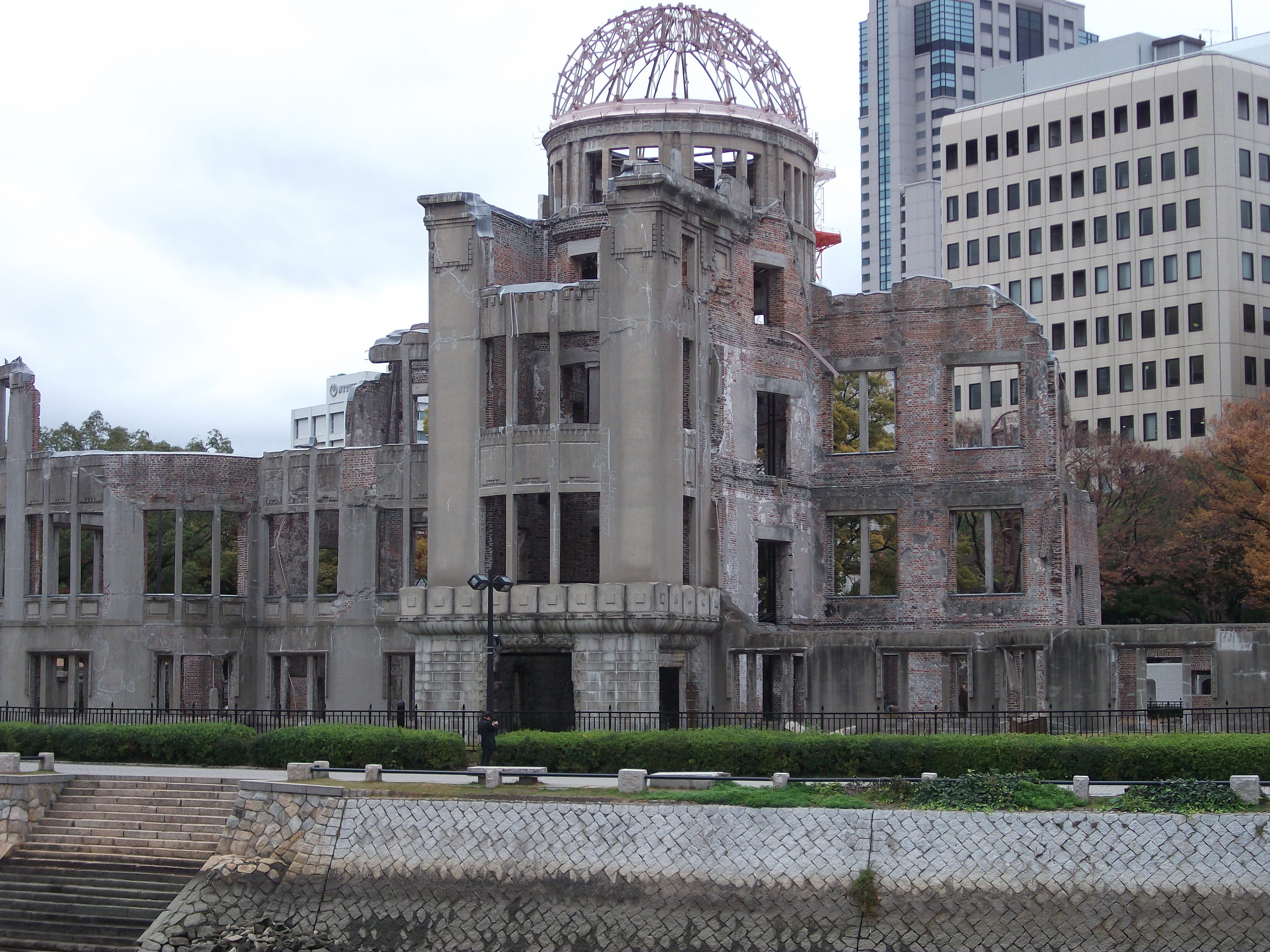
Then came Francis, the Pope of confusion. During his visit to Hiroshima in November 2019, Francis declared that the use of nuclear weapons was immoral and added that their very possession was immoral. This was not merely a condemnation of nuclear warfare and it wasn’t simply an appeal for disarmament. It appeared to remove the distinction which John Paul II had explicitly preserved. Francis argued that the possibility of an accident, the madness of an individual leader or the catastrophic consequences of nuclear conflict made possession itself morally unacceptable. These are serious considerations, indeed, the dangers of accidental escalation, technological failure and irresponsible leadership have become increasingly difficult to dismiss. It is entirely possible to argue that circumstances have changed so profoundly since 1982 that the conditions under which John Paul II considered deterrence tolerable no longer obtain. But that argument needs to be made, not simply assumed.
Here, I think, we encounter one of the characteristic weaknesses of Francis’s pontificate. Francis frequently identified genuine moral concerns, sometimes with considerable pastoral force, but rarely provided the theological precision necessary to explain how his conclusions related to established Catholic teaching. The problem was not necessarily his moral intuition, it was the tendency to express that intuition in categorical language before the doctrinal implications had been adequately worked through. In this instance, Francis seemed to move from saying that nuclear deterrence was becoming increasingly difficult to justify to declaring that possession itself was immoral and those two propositions are not identical. The first is a prudential judgement about whether particular circumstances continue to satisfy established moral conditions. The second, depending upon how it is understood, risks becoming a universal moral prohibition. Inevitably this means that if the latter is intended, Catholics are entitled to ask how it can be reconciled with the judgement of John Paul II.
The problem is larger than nuclear weapons
This is where the issue becomes particularly troubling and it is a trend we can discern running throughout the Bergoglian Pontificate. In the course of his tenure as the successor of Peter we witnessed similar difficulties surrounding the death penalty, aspects of marriage and sacramental discipline and the relationship between pastoral accommodation and established moral norms. These controversies are not identical, and it would be a mistake to treat them as though they all involved the same degree of doctrinal authority or the same theological problem, but nevertheless, a recurring difficulty was the failure to explain with sufficient clarity whether a new pronouncement represented a development of doctrine, a revised prudential judgement, or an apparent departure from previous teaching. For Catholics who take the magisterium seriously, these distinctions matter enormously. The Church does not understand doctrinal development as a process by which yesterday’s truth becomes today’s error, authentic development deepens our understanding of what has been handed down. It may clarify principles, correct inadequate formulations and apply enduring truths to circumstances that earlier generations could scarcely have imagined, but it must preserve an intelligible relationship with what came before. St John Henry Newman’s great insight was that genuine development preserves the identity of the doctrine being developed. Growth is not the same thing as contradiction. If a pope believes that a previous moral judgement can no longer be sustained, he owes the Church a careful explanation of why. Is the principle itself being reconsidered? Were the relevant circumstances misunderstood? Has the factual situation changed? Or was the earlier judgement always contingent? Without those distinctions, the faithful are left to construct their own explanations. Some conclude that the Church has simply changed her mind. Others insist that every papal statement must somehow be reconciled, however strained the argument becomes. Still others begin to lose confidence in the reliability of the teaching office itself.
None of these outcomes serves the Church well.
Why doesn’t Pope Leo simply correct Francis?
This is perhaps the most difficult question for Catholics who have watched these developments with growing concern.
