


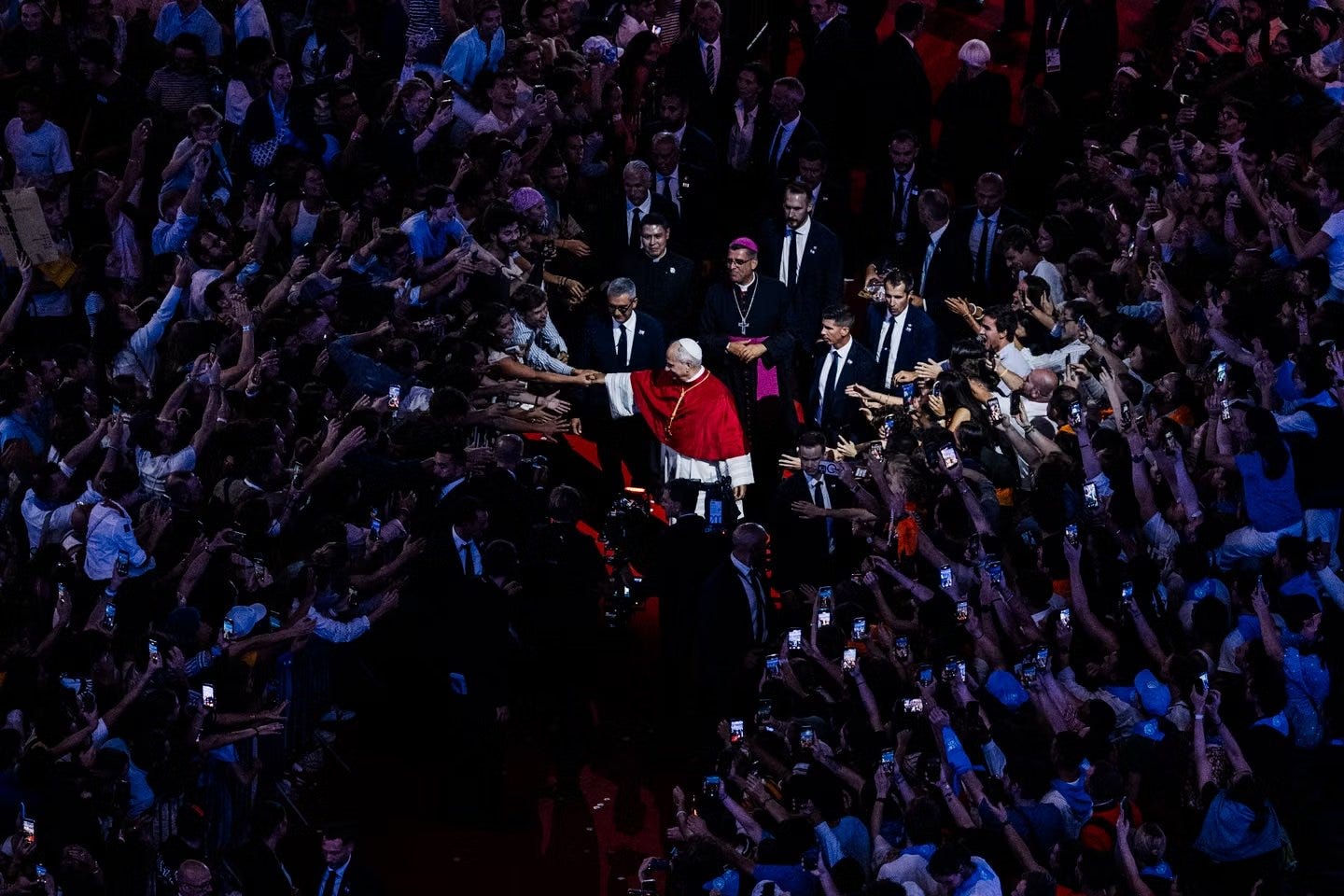
For a moment, the Stade de France looked like any other stadium welcoming a famous visitor. There were songs, lights, an enormous crowd and young people chanting the name of the man they had come to see, Pope Leo walked through the crowd — everyone wanted to see him, everyone wanted to speak to him, everyone was reaching out to touch the man in white. It would have been easy to watch a few seconds of footage, call it a triumph of papal celebrity and move on.
But then the stadium fell silent.
The Cross and the Holy Tunic of Argenteuil were placed before those young people and the whole atmosphere of the evening changed register. The cheers had been real, but they had not been the whole story. Eighty thousand people had come together in one of the great public spaces of secular France and now they were being invited to contemplate the suffering and death of Jesus Christ. That is a more interesting phenomenon than any individual with popular appeal filling a stadium with fans and it begs a question: What did the youth of France come looking for and what might happen if the Church takes their search seriously?
France makes the question unusually sharp. Its secular republic promises freedom of conscience, and no one can be forced into faith. But freedom of conscience does not require a society to behave as though God is absent. That is where a political rule can harden into a cultural prejudice: Christianity is tolerated as a private attachment, while Catholics are expected to leave their account of the human person at the door when public life begins. The crowds gathered to see the Pope suggest that faith has not accepted those limits. They came together in public because Christ speaks to the whole of life.
When faith is treated as a private preference, public life can become very good at discussing rights, choices, productivity and consent, yet strangely hesitant to ask what a human life is for. We have unprecedented means of communication and still find ourselves lonely. We celebrate freedom from inherited commitments while wondering whether anything is worth a lifelong promise. These are not arguments against the genuine achievements of modern society. They are reminders of their limits. Rights can protect a person, but they cannot tell us why that person is precious; prosperity can make life more comfortable, but it cannot explain why life is worth living when comfort, strength and usefulness are gone.
But what, exactly, were those young people responding to when they chanted Leo’s name, and what will the Church owe them once the stadium is empty?
