


There are episcopal appointments which are surprising, appointments which are disappointing and there are appointments which seem to demand an explanation. The decision of Pope Leo XIV to appoint Bishop Lizardo Estrada Herrera OSA as Coadjutor Archbishop of Cuzco belongs firmly in the third category.
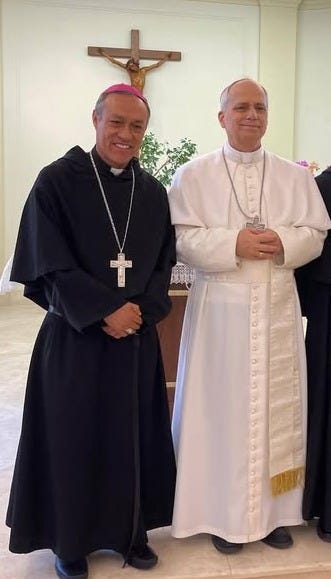
On 29 August the Holy See announced that Estrada, until now an auxiliary bishop of Cuzco, had been appointed coadjutor of the ancient Peruvian archdiocese. This is more than simply an honorary promotion because a coadjutor possesses the right of succession. Barring some extraordinary intervention, Lizardo Estrada will therefore become the next Metropolitan Archbishop of Cuzco.
Under ordinary circumstances there would be nothing particularly startling about that. Estrada is 52, has been a bishop since 2021, holds advanced degrees in moral and pastoral theology, has considerable experience of Augustinian government and formation and since 2023 has served as Secretary General of CELAM, the Latin American Episcopal Council. On paper, at least, one can understand why his name might appear on a terna for metropolitan office. But these are not ordinary circumstances. Only sixteen days before his promotion, Estrada participated in an indigenous ceremony in Cuzco which involved an offering to “Mother Earth”. The ceremony took place on 13 August at the opening of the gathering Entrelazando Voces por la Dignidad. According to the available reports and footage, participants were given coca leaves while the woman leading the ceremony spoke about Mother Earth and the significance of the month of August. The participants were instructed to breathe upon the leaves and then place them into an offering. Estrada did not merely observe what was happening from a respectful distance, he jumped right in and participated in the prescribed ritual action.
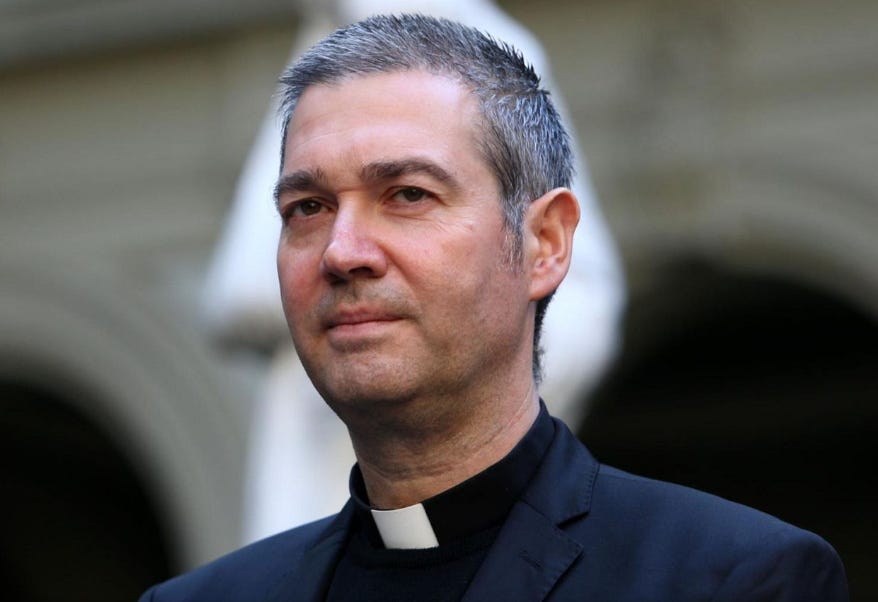
Estrada was not the only senior churchman to participate. Alongside him was Mgr Jordi Bertomeu, an official of the Dicastery for the Doctrine of the Faith and one of Pope Francis’s most trusted troubleshooters, whom Francis repeatedly employed as his personal envoy in some of the Church’s most sensitive investigations. Bertomeu has spoken with striking enthusiasm about the Bergoglian project, praising Francis as the Pope who understood that the Church must enter into “modernity”, coexist with other beliefs and seek what unites rather than separates, a pontiff who, in Bertomeu’s memorable phrase, had the Second Vatican Council “in his DNA”.
The connection did not end with Francis. Bertomeu knew Robert Prevost before the conclave, exchanged messages with him and subsequently revealed that Prevost had been his own preferred candidate for the papacy. Indeed, after Leo’s election Bertomeu immediately interpreted the new pontificate through the lens of continuity with Francis, describing Prevost as a man who had grasped the novelty of Francis’s approach and suggesting that Leo would continue his predecessor’s work, albeit with his own nuances. The presence of both Estrada and Bertomeu at the Cuzco ceremony therefore makes it considerably harder to dismiss what happened as the eccentric behaviour of an isolated local bishop. Two well-connected churchmen, both closely associated with the ecclesiastical world created by Francis and both personally known to his successor, participated in the ritual.
For anyone who followed the Amazon Synod controversy of 2019, there is an almost weary familiarity about all this. We have already had the arguments about terminology, inculturation and indigenous symbolism. We have already watched Catholic commentators tie themselves in theological knots attempting to explain why actions which appeared to be religious veneration of “Mother Earth” were actually nothing of the sort. We have already been assured that what looked like an act of worship could not possibly be an act of worship because those involved did not intend it to be one. There comes a point at which such distinctions cease to illuminate and begin to obscure.
The Vatican itself eventually referred to the controversial figures of 2019 as representing “life, fertility, mother earth”, while Pope Francis subsequently called them “the statues of the pachamama”, insisting that they had been present “without idolatrous intentions”. Whatever judgement one ultimately reached about subjective intention, the scandal produced by the spectacle was enormous and entirely foreseeable. The best you could say is it was extremely unwise, so it is reasonable to expect that that should have taught the Church something.
Even if one were to adopt the most generous possible interpretation of the 2019 episode, it was manifestly catastrophic pastoral judgement. The Pope of Rome had permitted a ceremony in the Vatican Gardens in which people prostrated themselves before objects associated with Mother Earth, and images of the event travelled around the Christian world. Catholics were scandalised, but they were hardly alone. Protestants and other Christians who still understood Rome as a great historic bulwark of Christian monotheism looked on bewildered as scenes emerged from the Vatican which appeared irreconcilable with the first commandment.
The theological problem was not particularly complicated. The Catholic Church can receive, purify and Christianise indigenous cultures; indeed, she has been doing precisely that for two thousand years. What she cannot do is blur the distinction between the Creator and creation, or participate in religious actions which objectively appear to render honour to created realities. That boundary should have been rendered painfully obvious by the controversy of 2019. Seven years later, therefore, the question is not whether Catholics should embark upon another interminable debate about what the word “Pachamama” really means, the question is why a Catholic bishop, with the entire experience of 2019 behind him, would place himself in this situation at all.
Lizardo Estrada is not an anthropologist observing an indigenous ritual for academic purposes. He is a successor of the Apostles. He is a man with advanced degrees in moral and pastoral theology. He has taught in a seminary. He has been involved in religious formation. He is Secretary General of CELAM. Whatever charitable interpretation one might construct around the ceremony itself, a bishop of his experience should have possessed sufficient theological and pastoral judgement to recognise what participation would communicate. He participated anyway. And that is why the response from Rome is so extraordinary. The appropriate question after 13 August should surely have been whether Estrada required correction. At the very least, one might have expected him to explain publicly why a Catholic bishop had participated in an offering addressed to “Mother Earth” and how he reconciled that action with the Church’s perennial prohibition of religious syncretism. You would have expected questions to have been asked about his judgement. Instead, just sixteen days later, he was promoted. Not corrected. Not required publicly to clarify his actions. Not apparently asked to reassure scandalised Catholics that he professes the uniqueness of Christian revelation and rejects every form of idolatry and religious syncretism. Promoted. And promoted to become the future Archbishop of Cuzco, of all places: the ancient capital of the Inca Empire, a city whose very Christian history embodies the encounter between the Gospel and the pre-Christian religions of the Andes.
That would constitute remarkably poor judgement from Rome even if Lizardo Estrada were simply another name passing across the Pope’s desk. But he isn’t — Robert Prevost knows Lizardo Estrada very well. This is not one of those tenuous Vatican connections in which two churchmen happened to occupy neighbouring seats at a conference twenty years ago. Estrada has described Prevost as his professor and his spiritual director. Vatican News itself describes Prevost as Estrada’s formator in the Order of Saint Augustine. Estrada studied under him at Trujillo, where Prevost taught Patristics and Canon Law and served in Augustinian formation.
The relationship therefore goes back to Estrada’s formative years as a young religious. Teacher and pupil. Formator and seminarian. Spiritual director and directee. Fellow Augustinians. Later, fellow bishops in Peru. And now Pope and archbishop-elect. Is there anything improper about a pope appointing somebody he knows? You might argue that personal knowledge may actually improve episcopal appointments. If Leo has known Estrada for decades and knows him to be a man of exceptional faith, wisdom, courage and administrative competence, that is valuable information unavailable to a Roman bureaucracy examining files. Yet precisely because Leo knows Estrada so well, the question becomes harder rather than easier. Estrada is one of his own. And that brings us to a question which I had hoped Catholics might no longer need to ask after the death of Pope Francis. Whose man is he?