


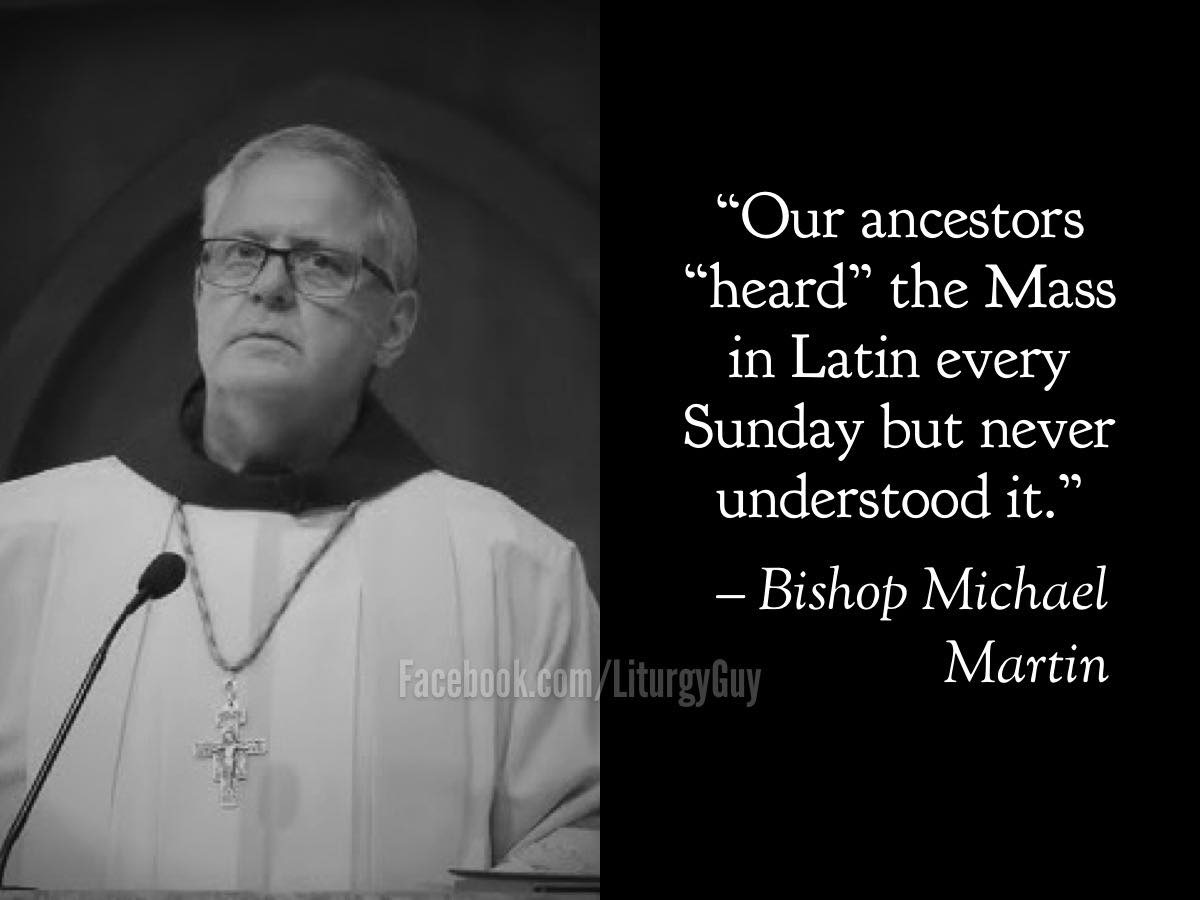
There are moments in the life of the Church when a local dispute suddenly reveals a much deeper and more troubling fault line. What is unfolding in the Diocese of Charlotte is one such moment. On the surface, the issue concerns altar rails, kneeling for Holy Communion, ad orientem worship and the continued constriction of the Traditional Latin Mass. In reality, it exposes a crisis of episcopal authority, continuity and trust that reaches far beyond North Carolina and touches the whole Catholic Church.
Charlotte was not a diocese in need of rescue. It was widely regarded as stable, growing and unusually successful in transmitting Catholic identity to families, young people and converts. Vocations were healthy. Parishes were full. Reverent liturgy was not a niche interest but a lived reality across much of the diocese. That reality did not emerge accidentally. It was cultivated patiently under the leadership of Bishop Peter Jugis and in conscious continuity with the direction given to the Church by Pope Benedict XVI in Summorum Pontificum. The recovery of liturgical tradition, far from being a retreat into nostalgia, became a source of evangelisation and ecclesial confidence.
Into this context came Bishop Michael Martin, newly appointed and almost immediately determined to impose a radically different liturgical direction. Restrictions were announced that went well beyond the regulation of the Traditional Latin Mass. Altar rails and kneelers for Holy Communion were prohibited. Ad orientem celebration was discouraged or forbidden. Practices that had fostered devotion and reverence were treated not as legitimate expressions of Catholic worship but as problems to be corrected. The speed and scope of these changes communicated something unmistakable to clergy and laity alike: what had flourished here was now suspect.
The justification offered for this reversal is Traditiones Custodes. Issued by Pope Francis in 2021, the document sought to curtail the juridical framework established by Summorum Pontificum and to reassert episcopal control over the older liturgical form. Yet even granting the authority of Traditiones Custodes, it is striking how expansively it has been interpreted in Charlotte. Measures with no explicit mandate in the text, such as banning kneeling supports or altar rails, have been justified in its name. This raises an unavoidable question. Is this really about the letter of papal legislation, or about a broader ideological project that seeks to marginalise a certain vision of Catholic worship and life?
This is where the situation becomes acutely political. Bishop Martin is a Pope Francis appointee. His actions align neatly with a Vatican narrative that portrays the post Summorum Pontificum resurgence of tradition as a threat to unity. It is difficult to avoid the conclusion that suppressing the visible fruits of Benedict XVI’s liturgical vision is seen, in some quarters, as a gesture of loyalty to the current pontificate. Whether consciously or not, the bishop’s authority is being exercised in a way that signals compliance upward rather than pastoral attentiveness outward. For priests and families on the ground, the message is devastating. What was encouraged yesterday is punished today. What was once praised as faithful Catholic devotion is now treated as disobedience. What, except for a total lack of coherence, can this convey? Certainly nothing positive!
The crisis deepened when approximately thirty one priests of the diocese submitted a dubia to the Dicastery for Legislative Texts. Their action was not rebellion. As Father Gerald Murray has rightly insisted, it was a legitimate appeal within the Church’s own juridical system. They asked whether a diocesan bishop truly possesses the authority to prohibit practices that universal law permits, especially when those practices concern the manner of receiving Holy Communion. In the United States, the faithful have the right to receive Communion kneeling. No bishop may abrogate that right by local decree. The dubia therefore exposes not merely a pastoral disagreement but a serious question of justice.
Rome now faces a dilemma of its own making…Or perhaps more accurately of Pope Francis and Cardinal Arthur Roche’s making. If it sides unequivocally with the bishop, it confirms the fear that episcopal authority has become effectively unaccountable when exercised against tradition minded communities. It also reinforces the perception that the suffering of ordinary Catholics, the little ones who built their lives around the Church’s liturgical life, counts for little when set against ideological uniformity. If Rome sides with the priests, or even clarifies that certain prohibitions exceed episcopal competence, it implicitly admits that Traditiones Custodes has been used as a blunt instrument rather than a precise legal tool. Either way, the credibility of the Church’s governance is at stake.
There is also a deeper theological problem. How can it be magisterial for the Church to swing so violently between two liturgical visions within little more than a decade. Pope Benedict XVI assured the faithful that what was sacred for previous generations remains sacred and great for us. Families trusted that assurance. Some quite literally ordered their lives around it. I know families who moved from Chicago to Charlotte precisely because the diocese treasured liturgy and offered stability. They invested their faith, their children and their future in that promise. To now see that same direction treated as an error to be erased is not merely confusing. It is spiritually cruel.