


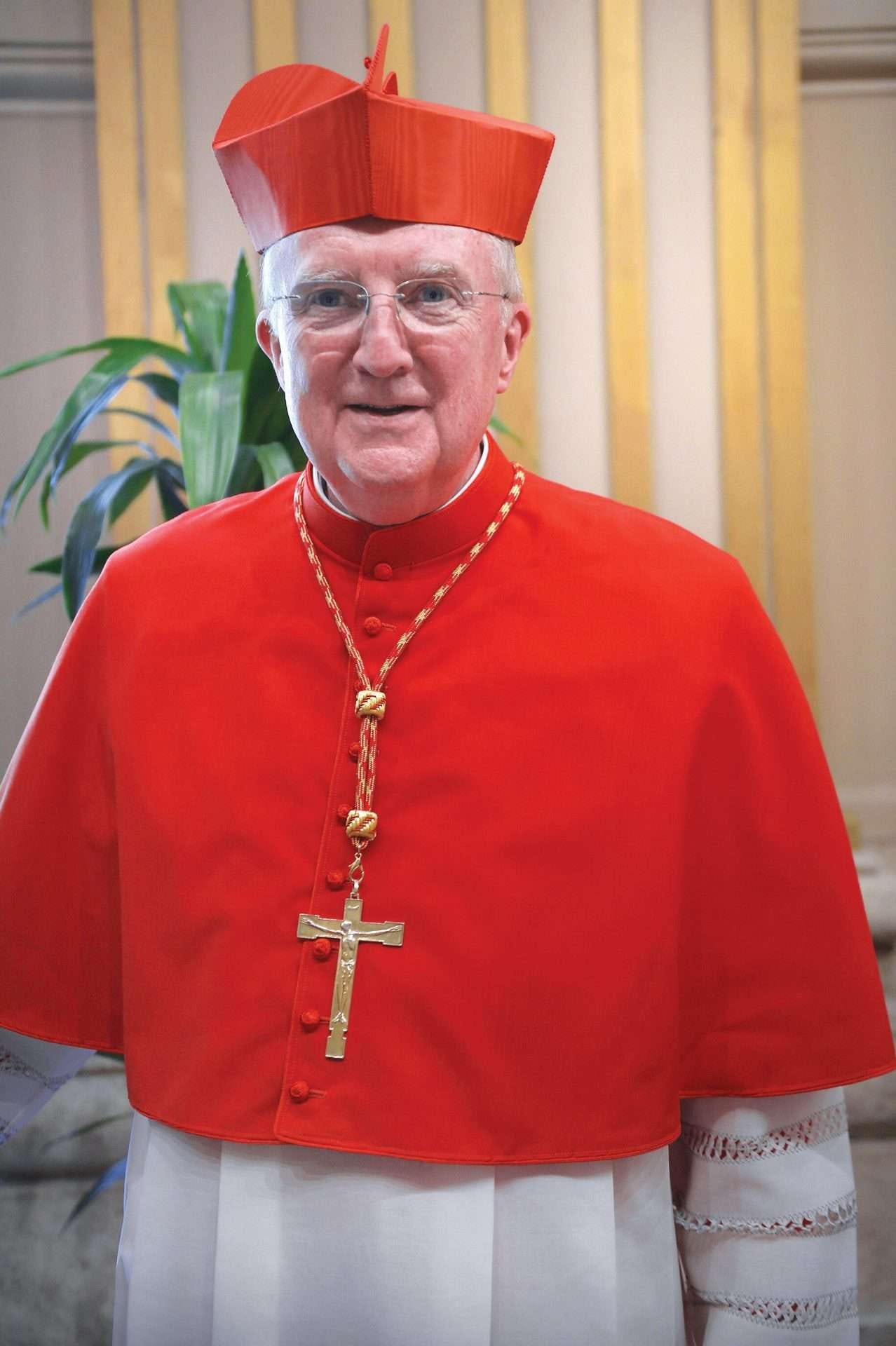
Cardinal Arthur Roche has given what is arguably the most significant interview on the future of the Traditional Latin Mass since Pope Leo XIV was elected. Speaking to The Tablet, Roche confidently declared that Pope Leo “is not going to change Traditionis Custodes“ and that there will be no return to Summorum Pontificum. If those words genuinely reflect the settled mind of the Holy Father, then they are quite devastating for many. But before we accept them at face value, we should ask a rather obvious question: On whose authority is Cardinal Roche speaking?
There is an important distinction between a prefect announcing a papal decision and a prefect expressing his own expectation of what the Pope will do. The interview, at least as published, does not clearly establish that distinction. Roche does not say that Pope Leo has instructed him to announce a decision, nor does he point to any formal papal act. Instead, he simply asserts that Leo will not reverse the restrictions imposed by Pope Francis. The confidence with which he makes that statement is striking, yet it also sits rather awkwardly alongside everything else we know about Pope Leo’s approach to the liturgy.
So, what do we actually know?
The truth her is that since his election, Pope Leo has been remarkably careful not to make any public statements about the Traditional Latin Mass. Unlike his predecessor, he has not chosen to fight the liturgy wars through interviews or public rhetoric. His actions, however, tell a more nuanced story. Last year, as regular readers will know, the bishops of England and Wales were informed through the Apostolic Nuncio that Pope Leo wished to grant generous exemptions to Traditionis Custodes. According to reports, the nuncio explained that the Holy Father intended to ask Cardinal Roche himself to administer the legislation generously.
Pope Leo XIV, the Nuncio, and the Latin Mass: What This Week’s Drama Really Reveals

Yesterday I posted a brief update on X about what was said inside the bishops’ plenary in Liverpool regarding Pope Leo XIV and the future of the Traditional Latin Mass.
Earlier this year, Pope Leo wrote to the bishops of France encouraging “concrete solutions” that would permit the generous inclusion of Catholics sincerely attached to the Vetus Ordo. The letter was communicated through Cardinal Parolin and the Secretariat of State rather than through the Dicastery for Divine Worship.
France, the Latin Mass, and Pope Leo’s Quiet Strategy

There are moments when a short Vatican message tells you more about the direction of travel than a major document. Pope Leo XIV’s intervention at the recent assembly of the French bishops is one of those moments. It has been reported, understandably, as a softening in tone towards Catholics attached to the older liturgical forms. Whilst I do not think that that reading is wrong, I do think it is incomplete. What is beginning to take shape is something more deliberate and, in its own way, more consequential.
He also permitted Cardinal Raymond Burke to celebrate a solemn pontifical Mass according to the 1962 Missal in St Peter’s Basilica.
None of these actions amount to a restoration of Summorum Pontificum. None repeal Traditionis Custodes. But neither do they resemble the policy Cardinal Roche has consistently advocated over the past five years. The contrast between what Cardinal Roche has said and what the Pope has done is difficult to ignore.
An intriguing pattern
One feature of these developments deserves more attention than it has received. The Pope’s conciliatory messages have not principally been communicated through the Dicastery for Divine Worship. Instead, they have come through the Secretariat of State and through the apostolic nuncios. That may simply be administrative convenience, but equally, it may indicate that Pope Leo preferred to communicate directly with bishops rather than have his intentions filtered through a dicastery whose prefect has become closely identified with the previous pontificate’s restrictive liturgical policy. I should be clear that that is an inference, not a fact, but it is an inference that naturally arises from the available evidence.
The timing is curious
Cardinal Roche’s interview also comes at an interesting moment.